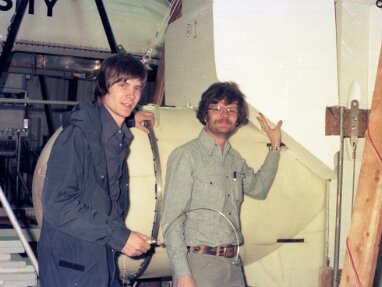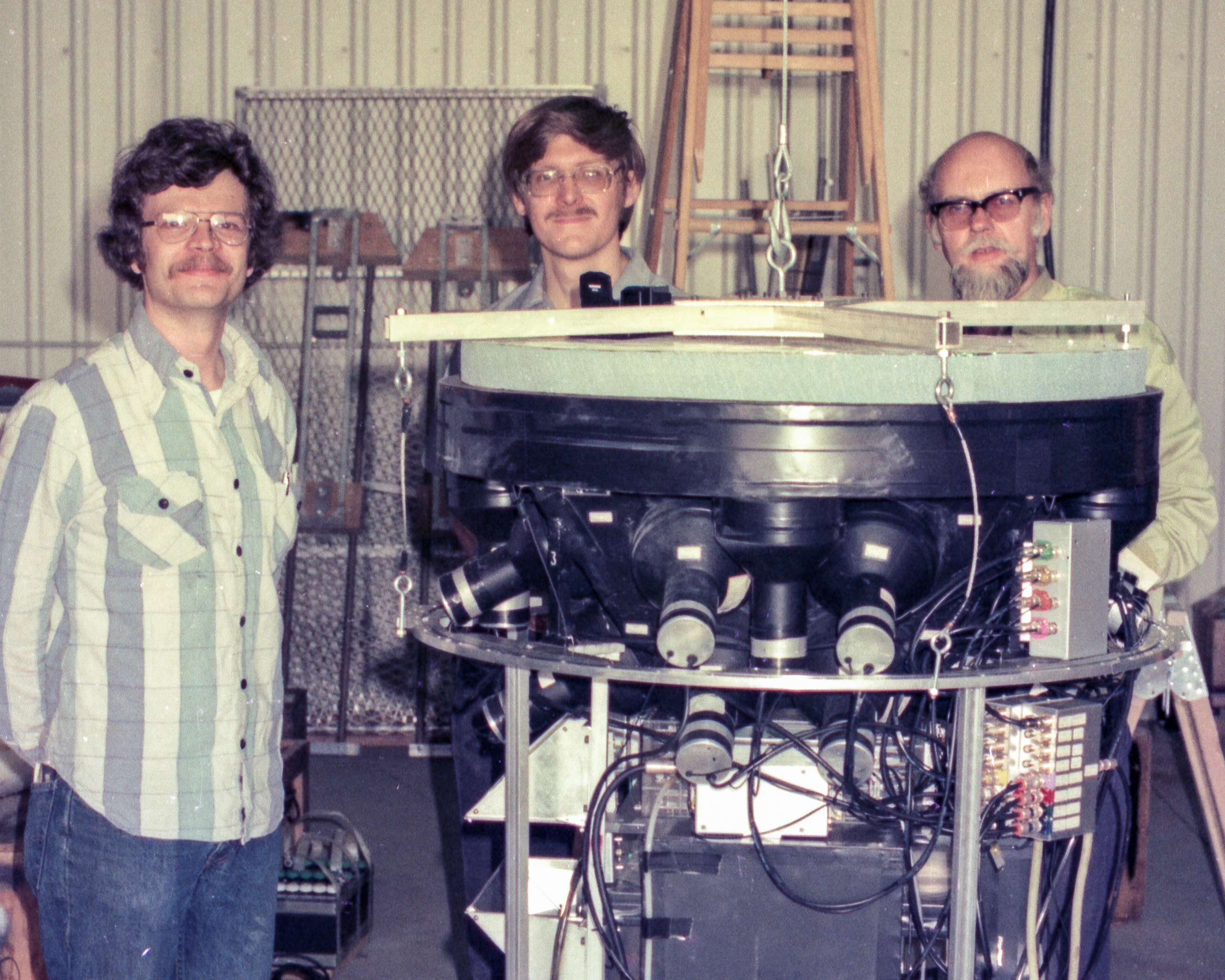
Cosmic ray instrument package with graduate students Chuck Gilman, Bob Scarlett, and principal investigator Dr. C J Waddington (not pictured: co-PI Phyllis Freier).
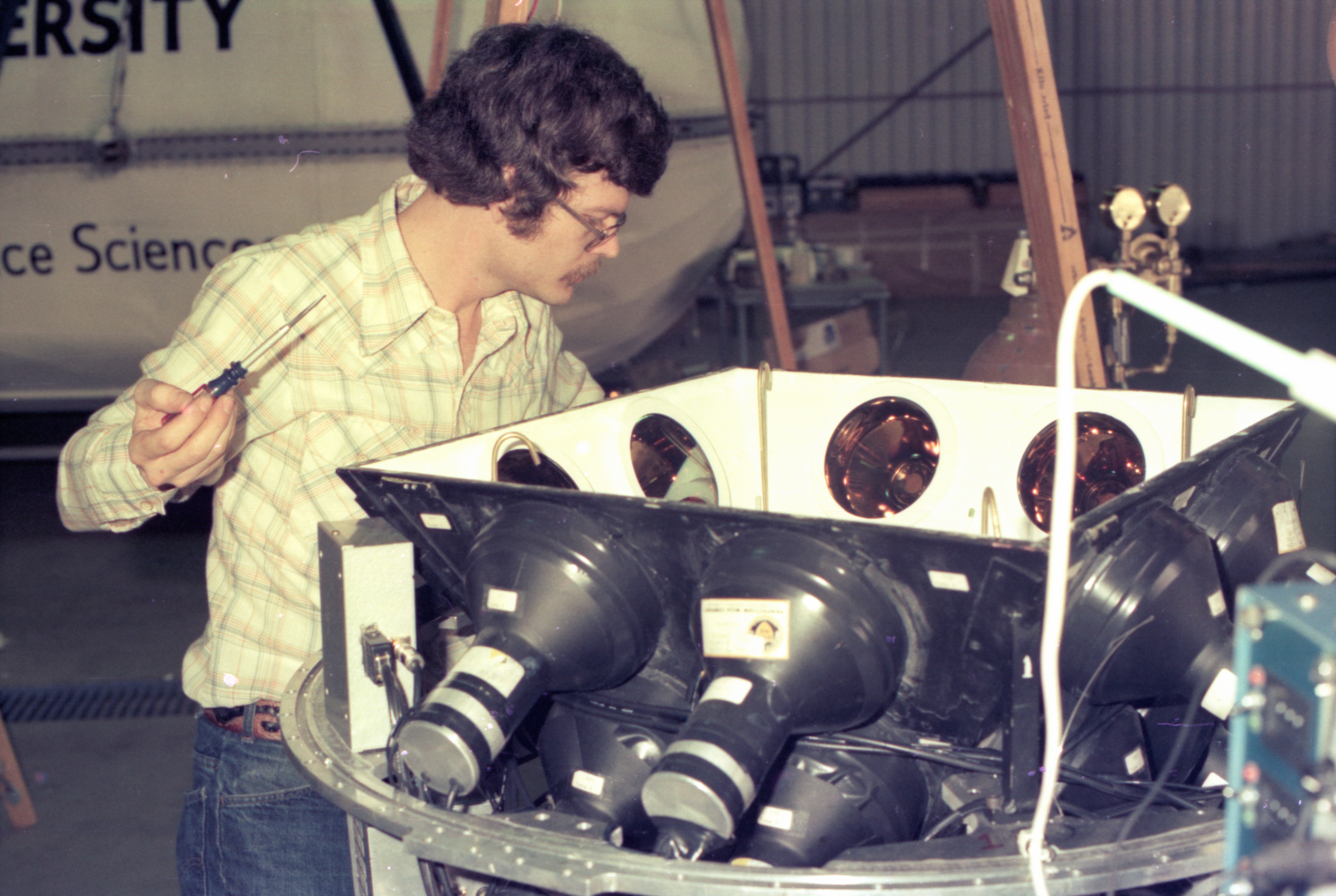
Chuck Gilman, inspecting and cleaning photomultipliers in the Cerenkov detector.
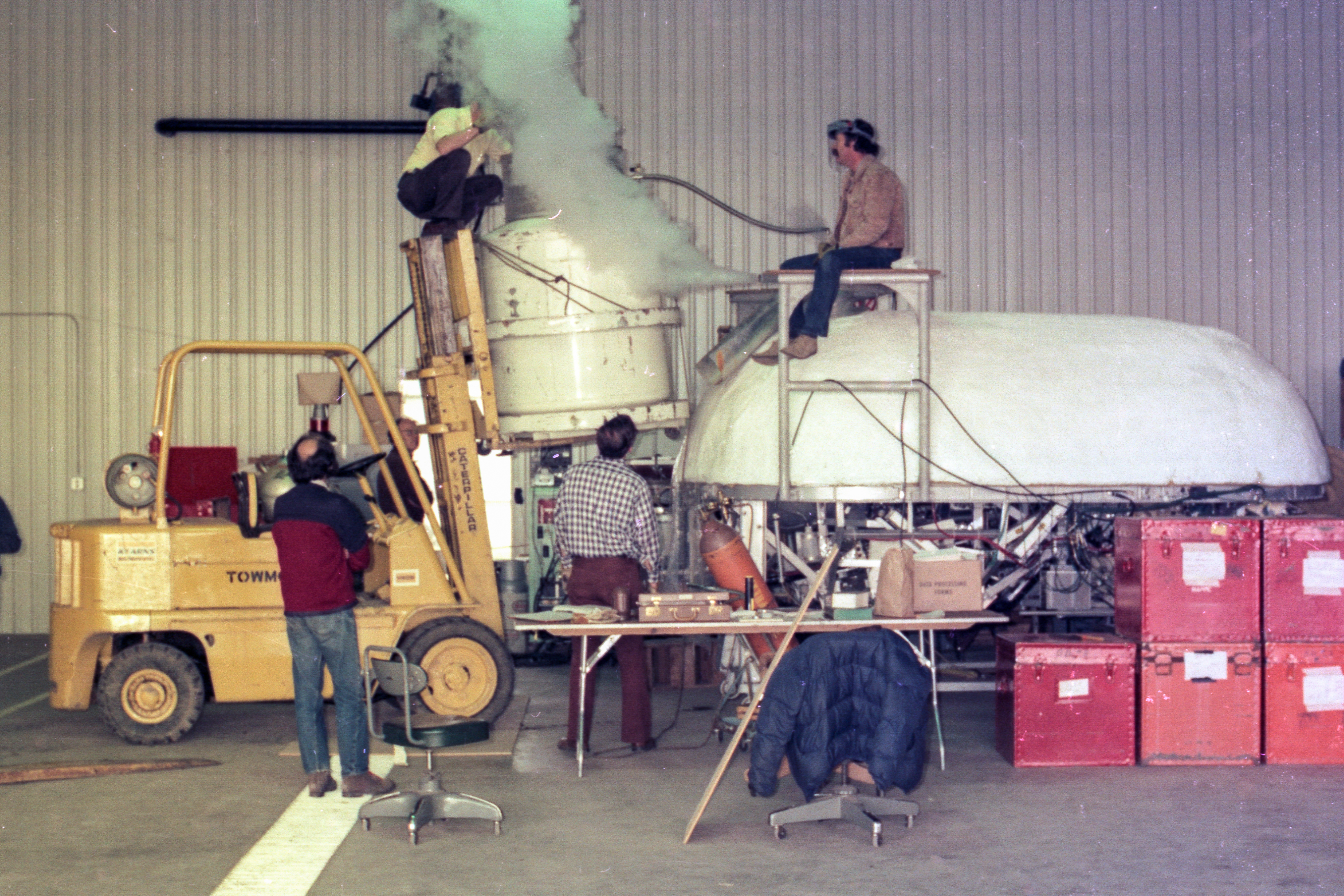
Feeding liquid helium to the Berkely superconducting magnet.
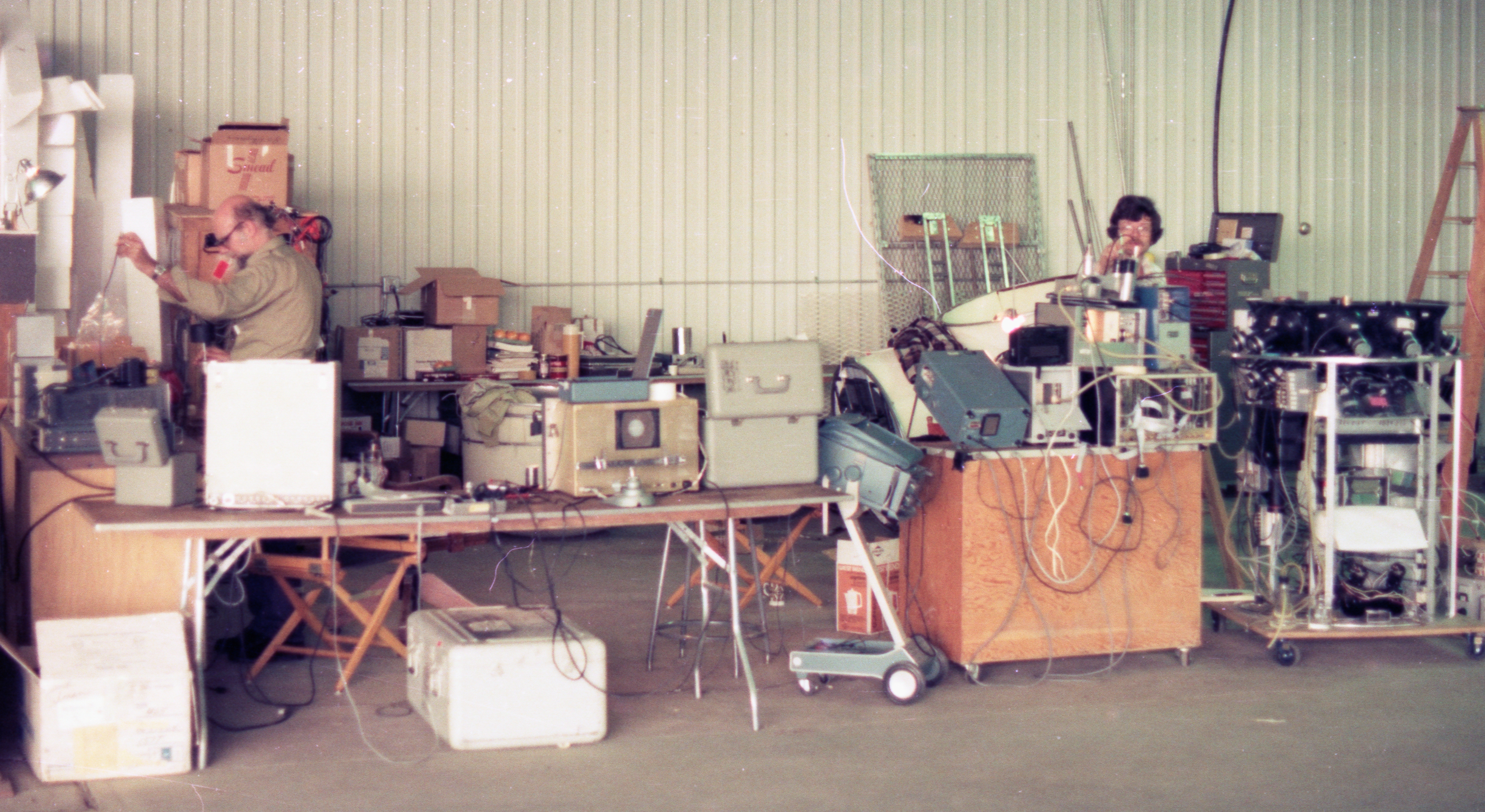
Our field lab set up in the airplane hangar. at right is the CRISIS instrument ready for final assembly by Chuck Gilman. Dr Waddington is on the left unpacking test equipment.
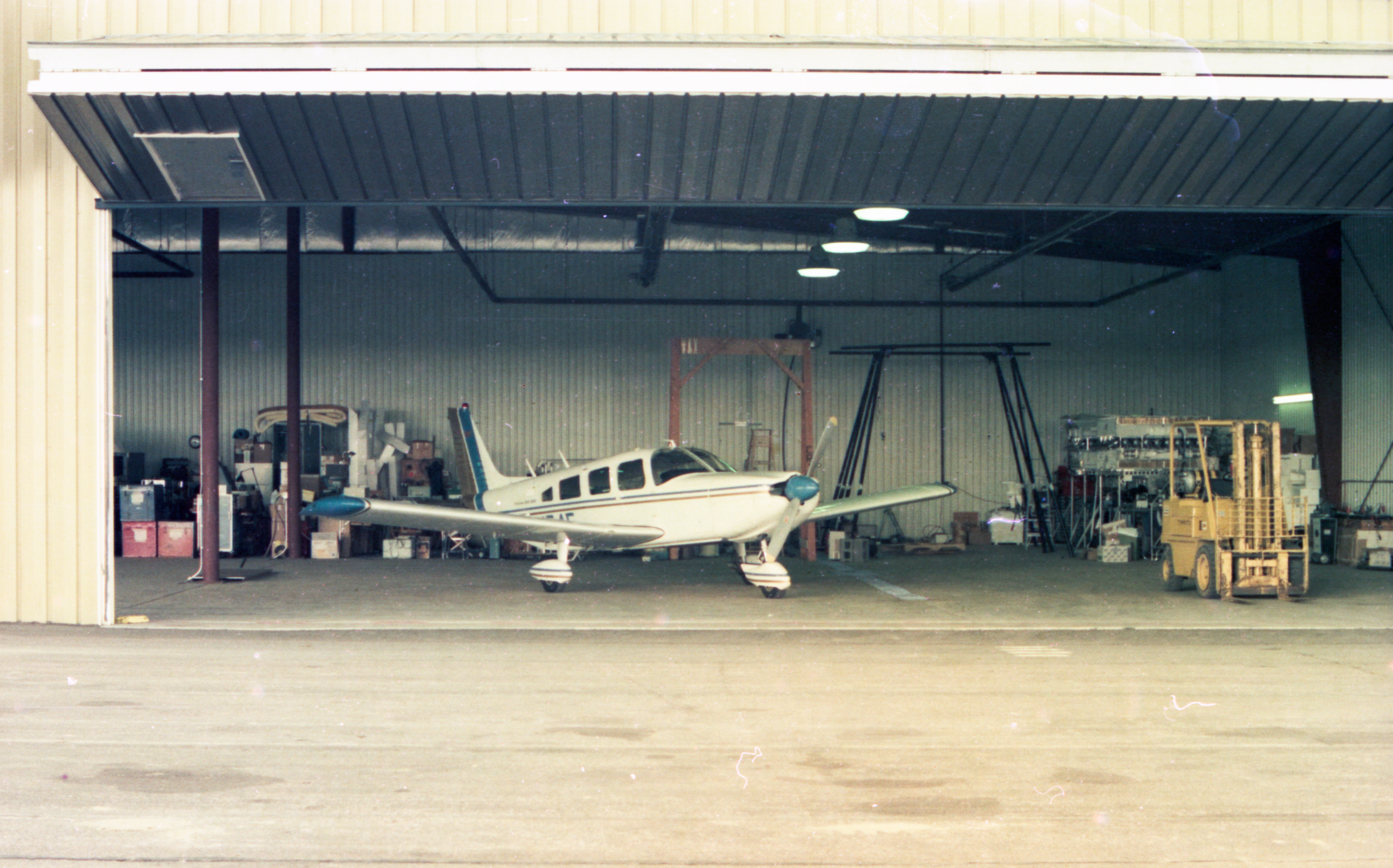
Our lab areas were set up in the back of an operating airplane hangar at the Watertown Municipal Airport.
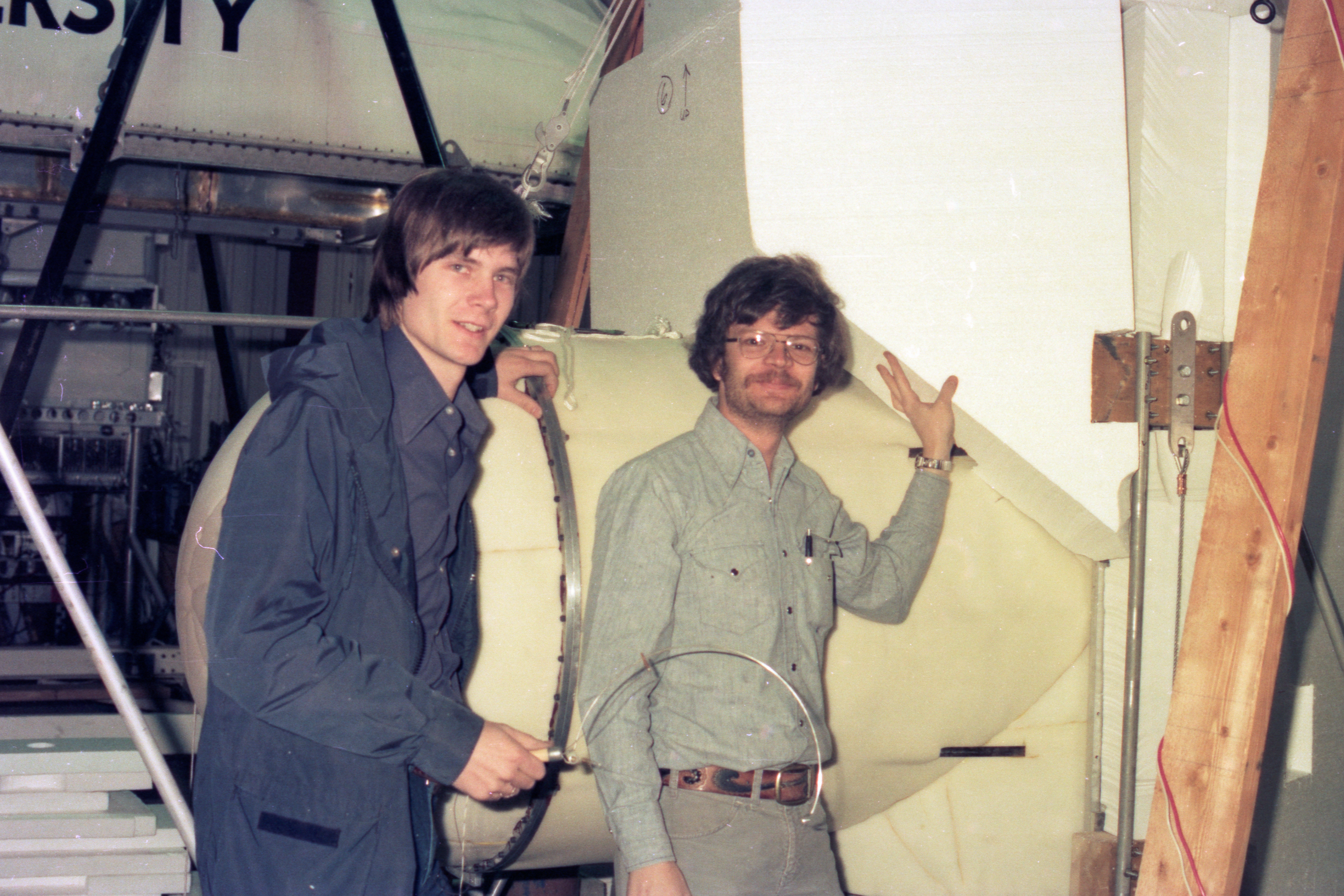
Standing next to the enclosed instrument, installing styrofoam insulation. I'm holding a hot-wire cutter to trim the blocks as needed to fit. I was celebrated as having carved the compound angles so accurately there was little need for touch-up!
19770500 Balloon Launch T10-14.jpg
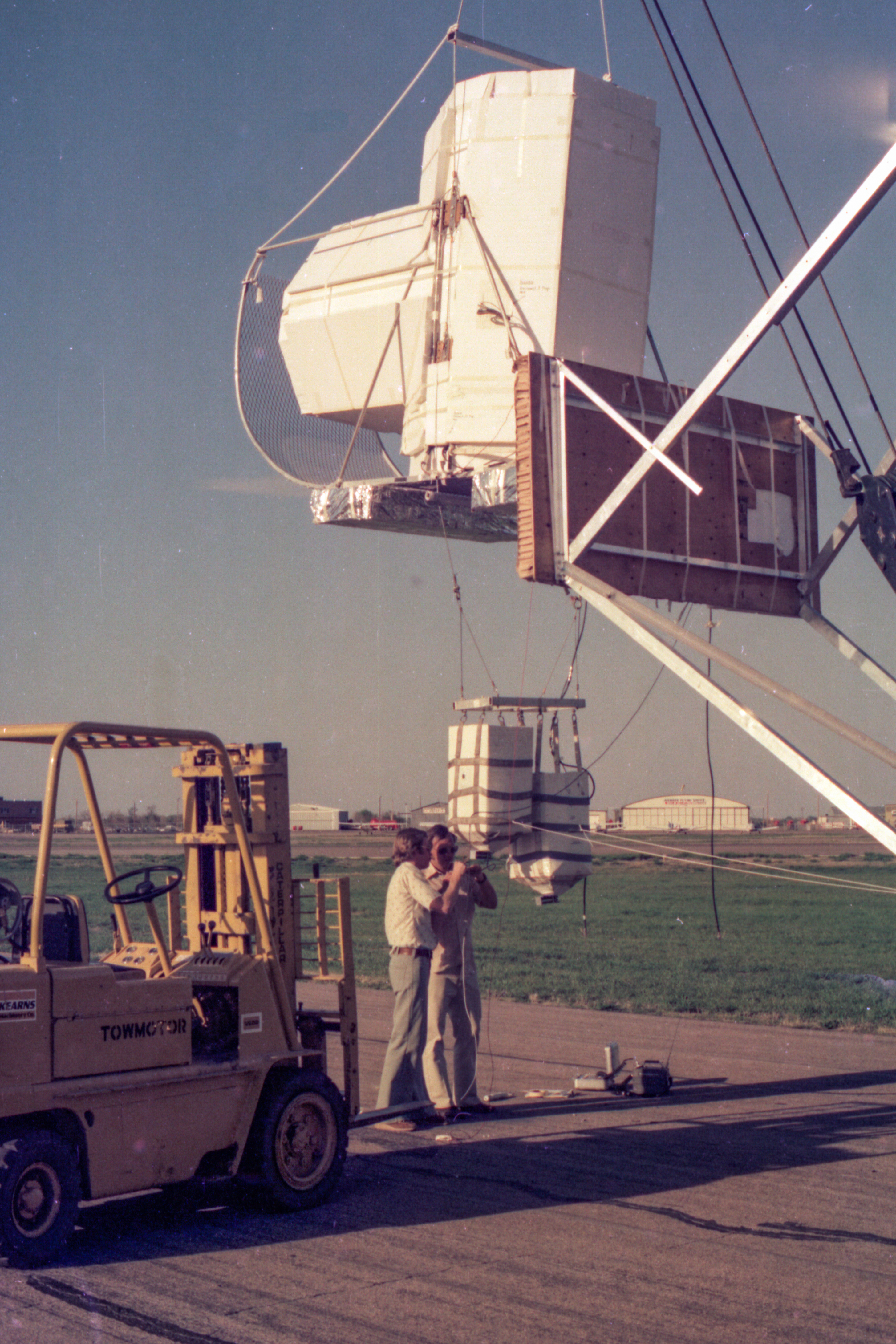
Setting the ballast under the payload-- sand that can be released in small amounts by radio control.
My hand-drawn logos on the styrofoam insulation of the instrument package.
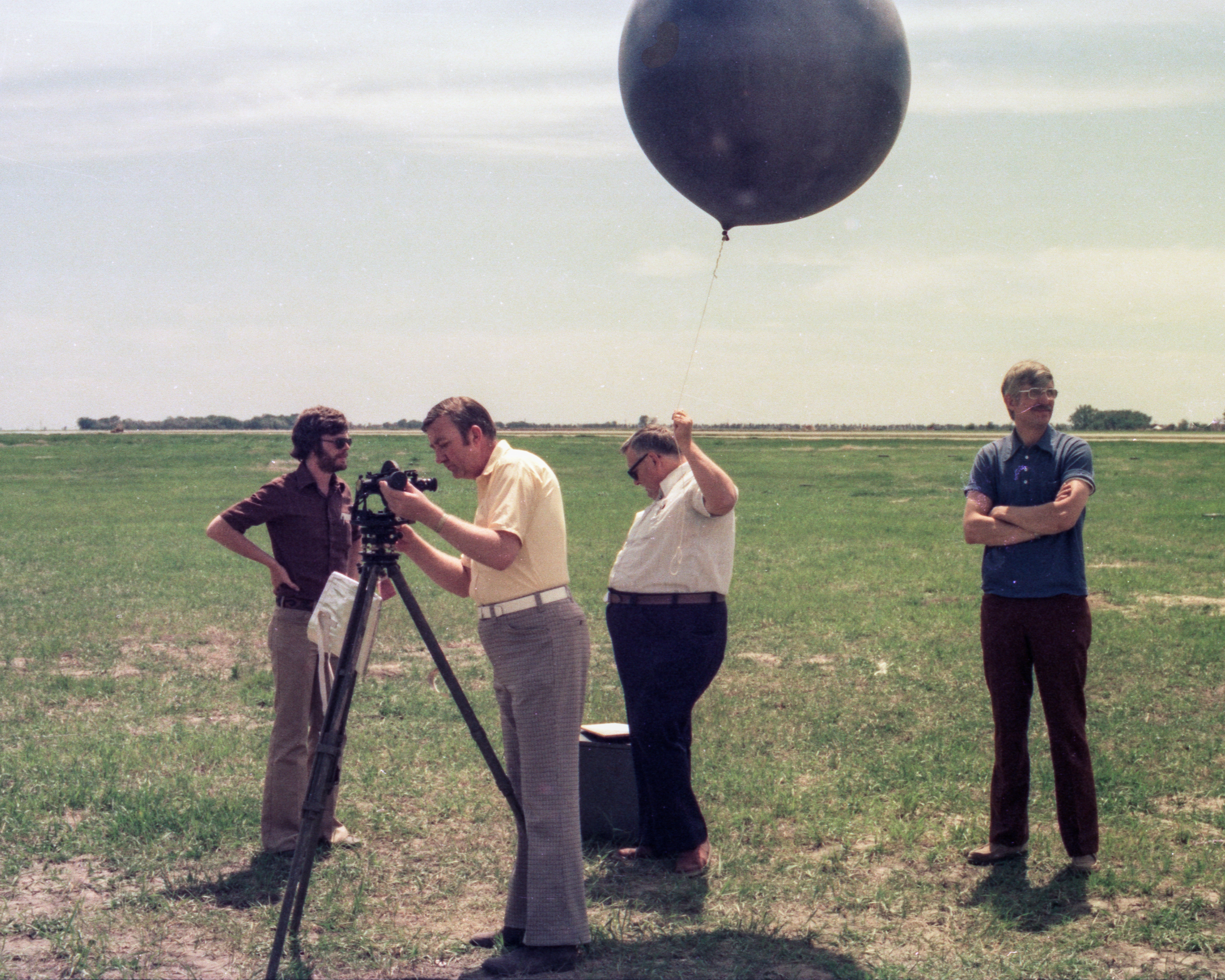
Preparing to measure the winds aloft. A transit telescope aims and follows the balloon as it rises and drifts with the wind.
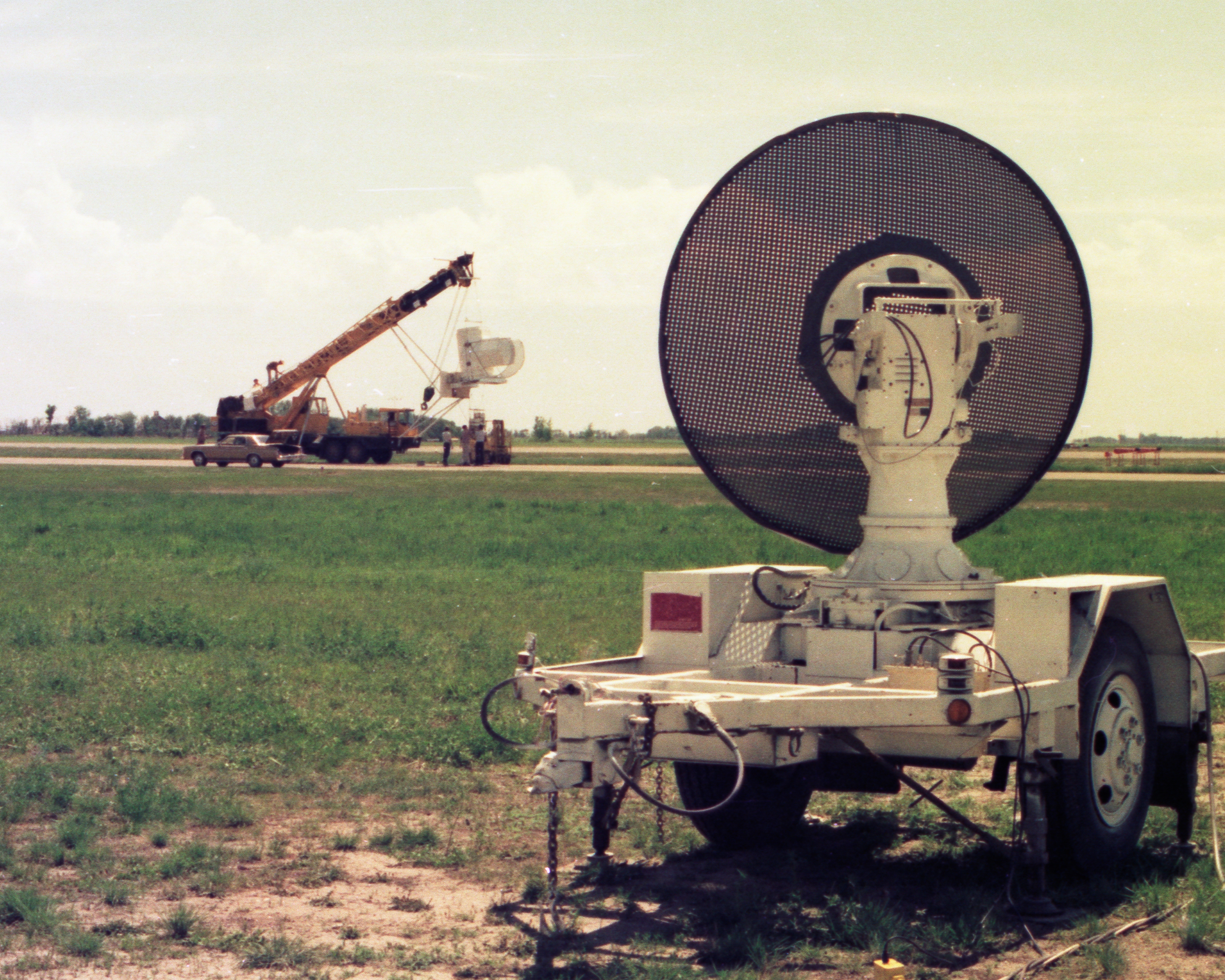
Communication with the instrument is via radio. This antenna will track the balloon over its full mission.
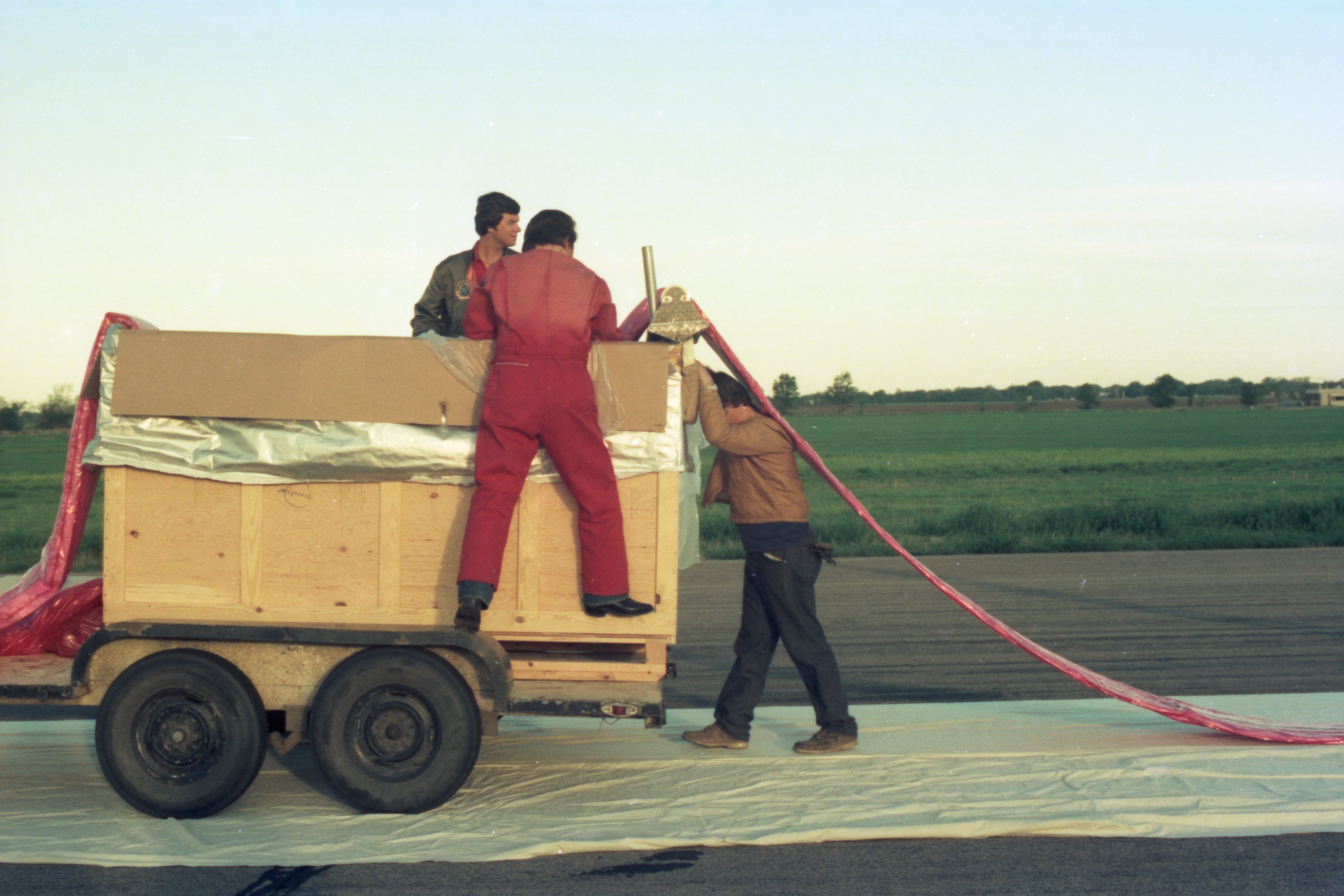
The balloon is carefully extracted from its container and laid out along the runway.
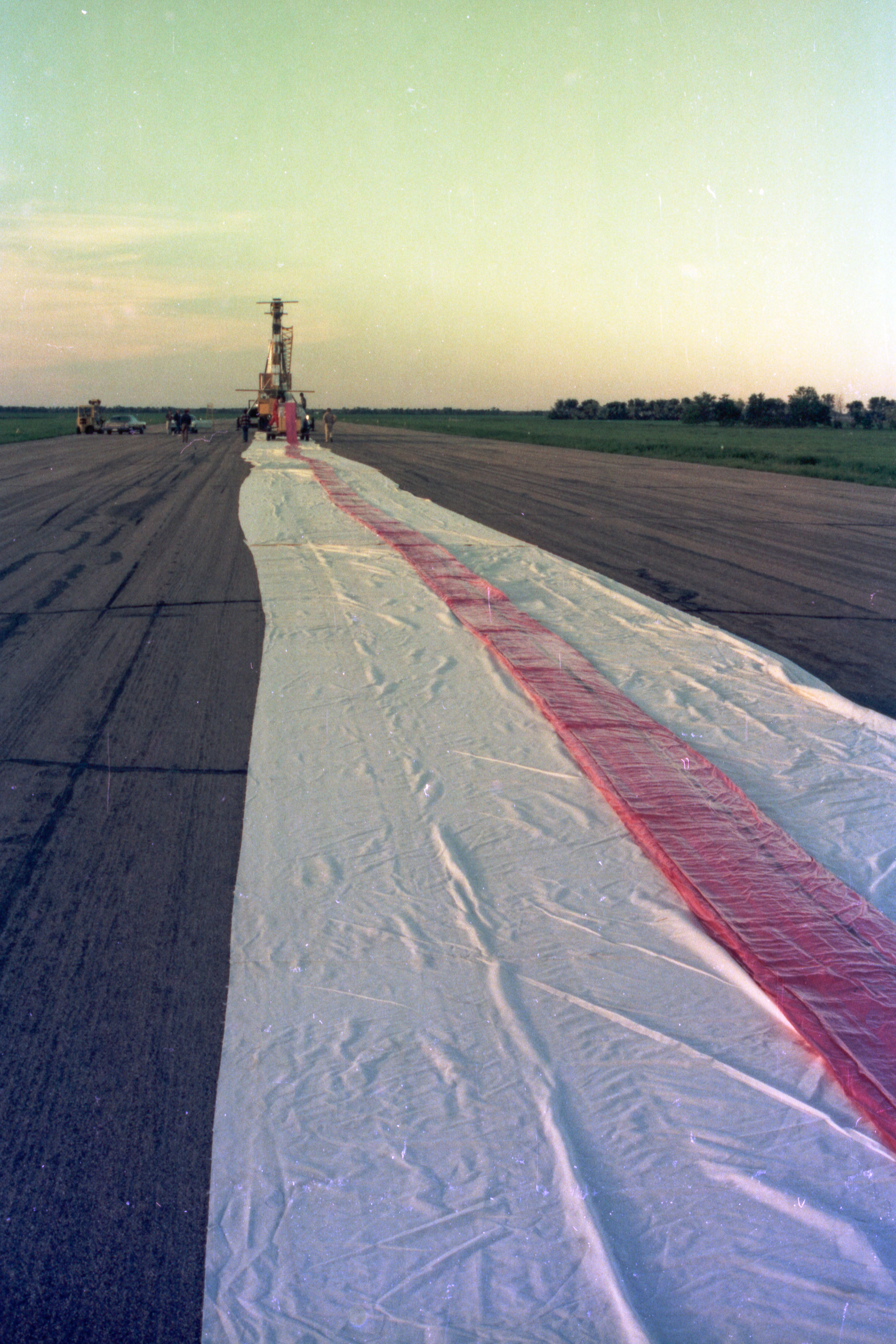
The balloon is still inside a red wrapper, and laid out on a white tarp protecting it from any sharp debris on the runway.
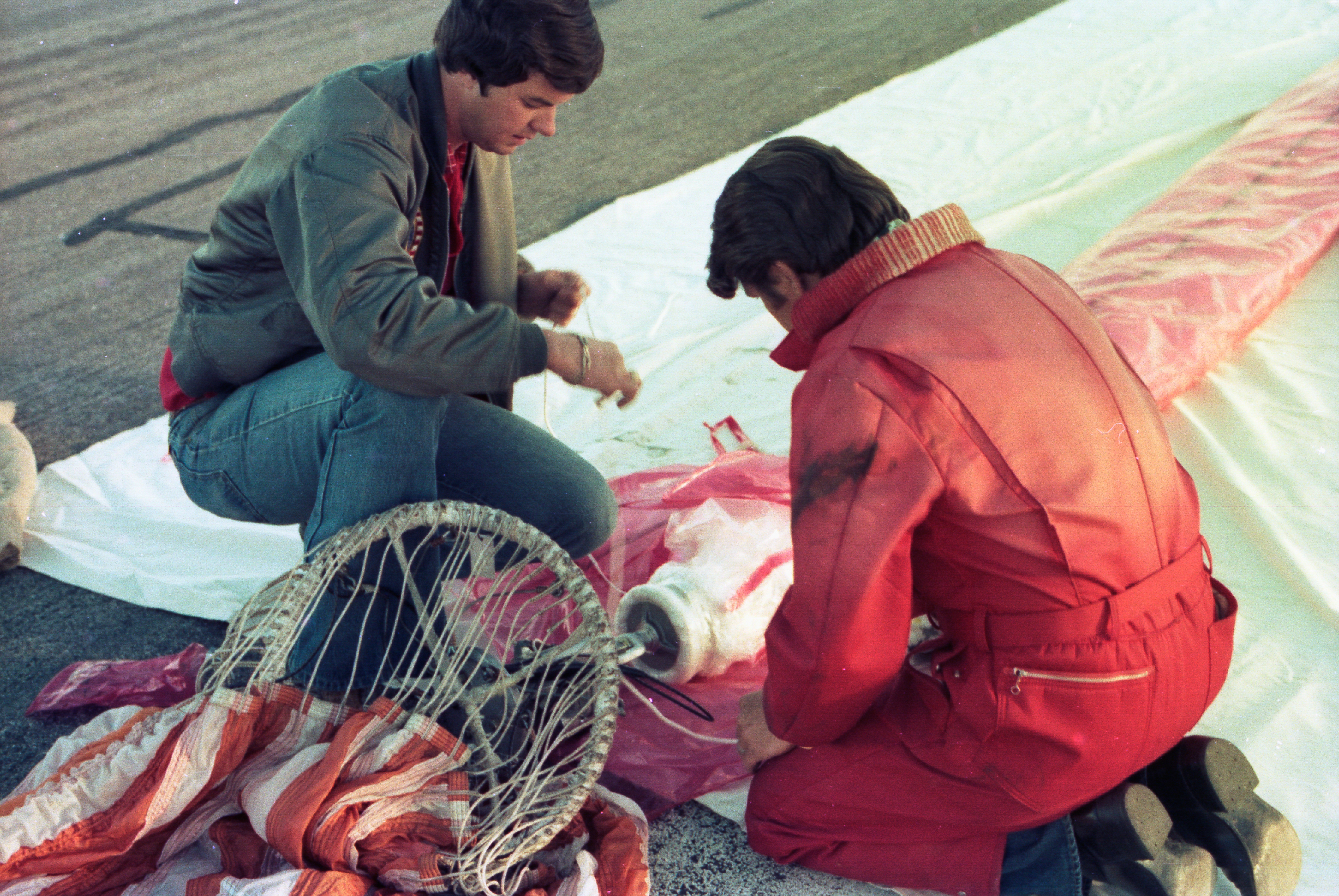
The top of a parachute is attached to the bottom of the balloon.
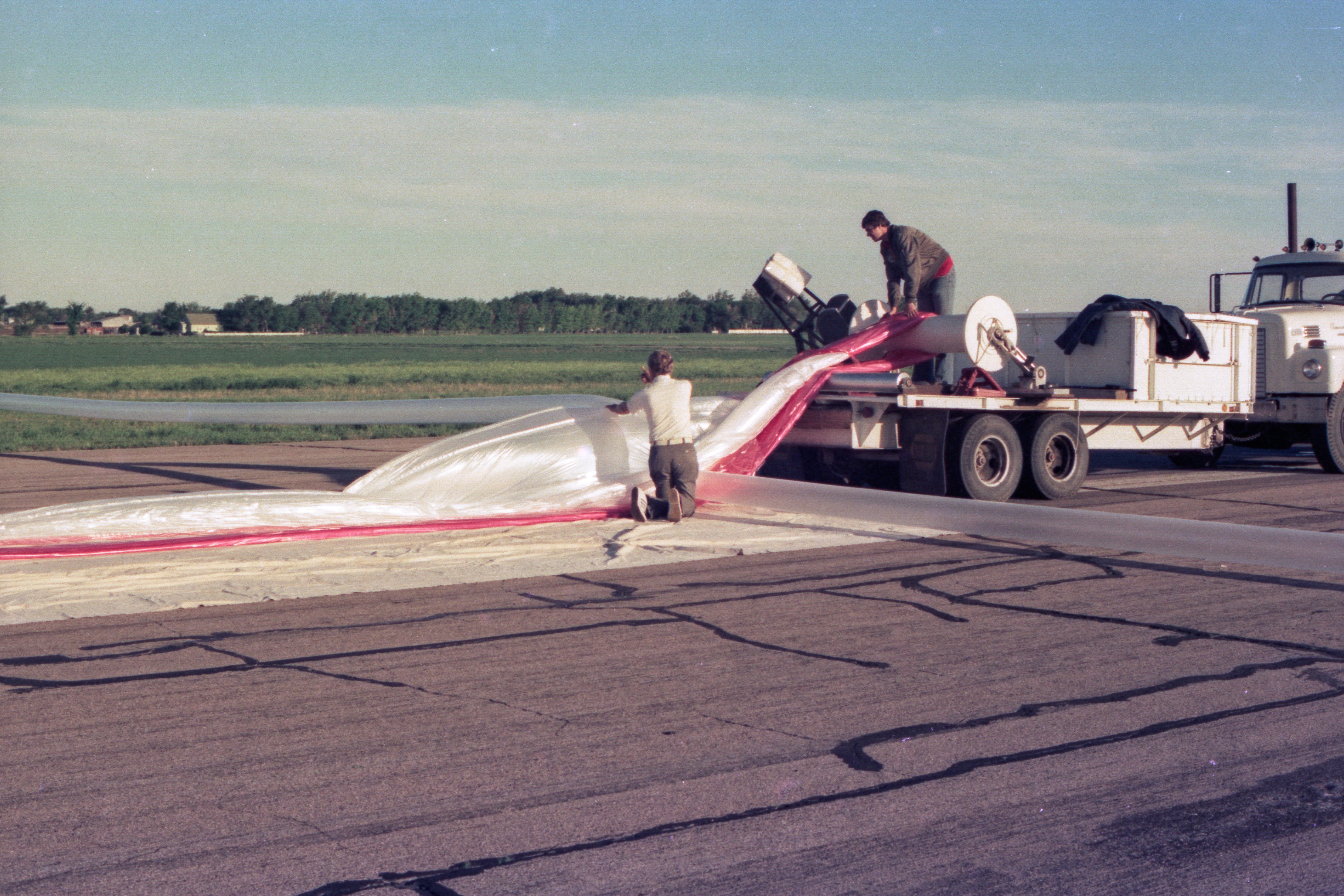
The balloon is threaded under a smooth spool, which will later spring open to release it. The top of the balloon is now removed from the red wrapper and a helium filling tube can be seen leading to the right.
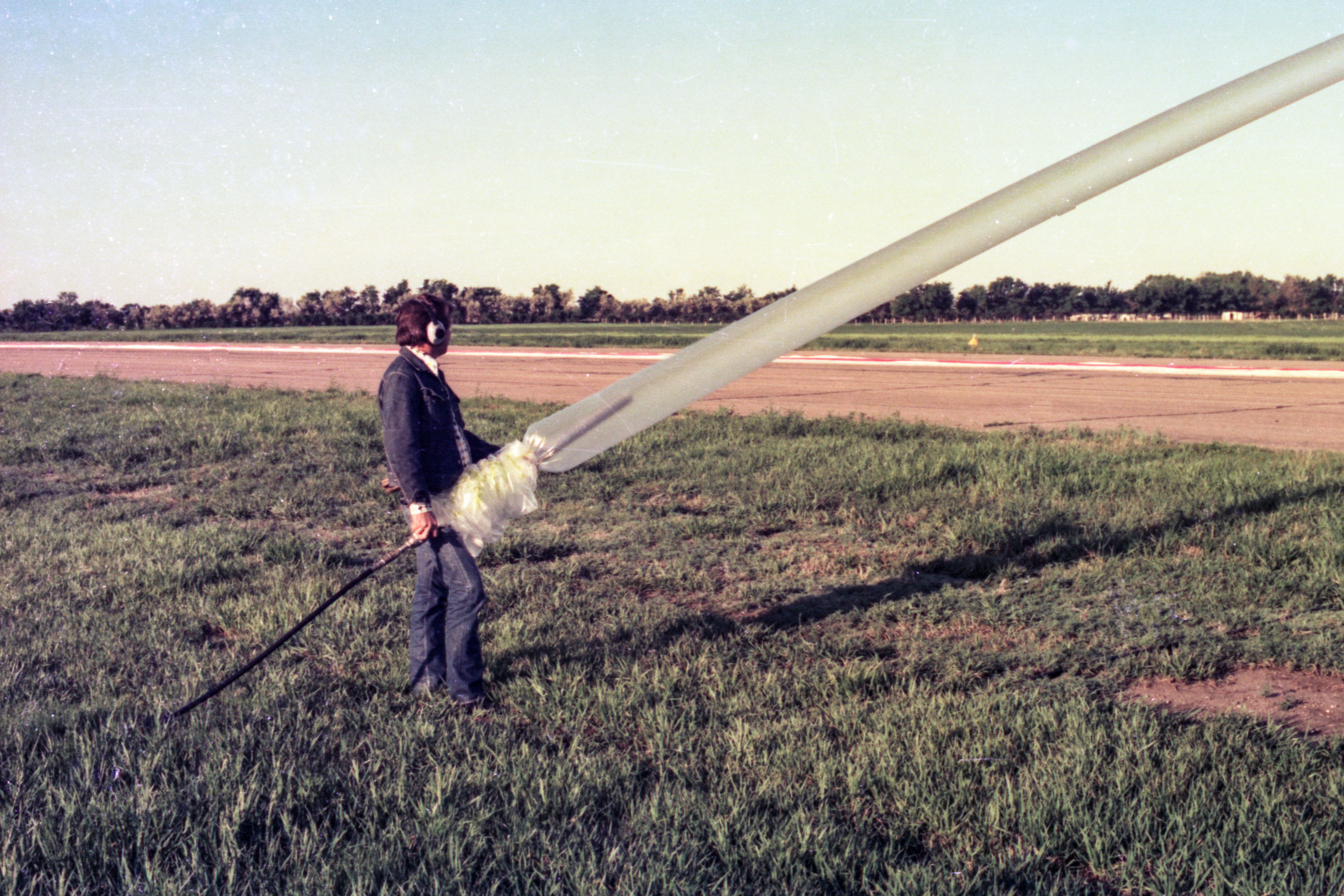
Helium is injected via a filler tube into the bubble of the balloon. It is a noisy process.
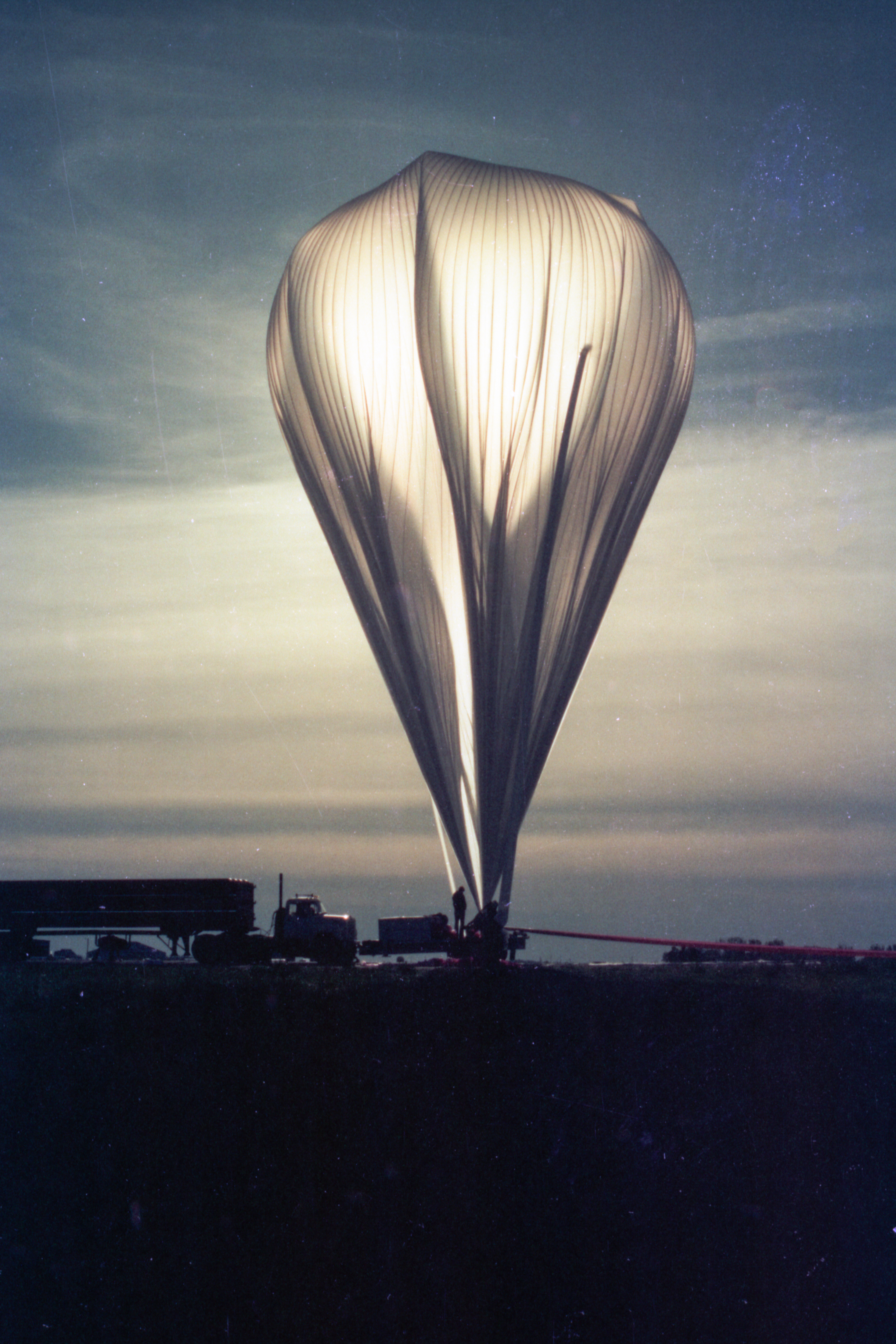
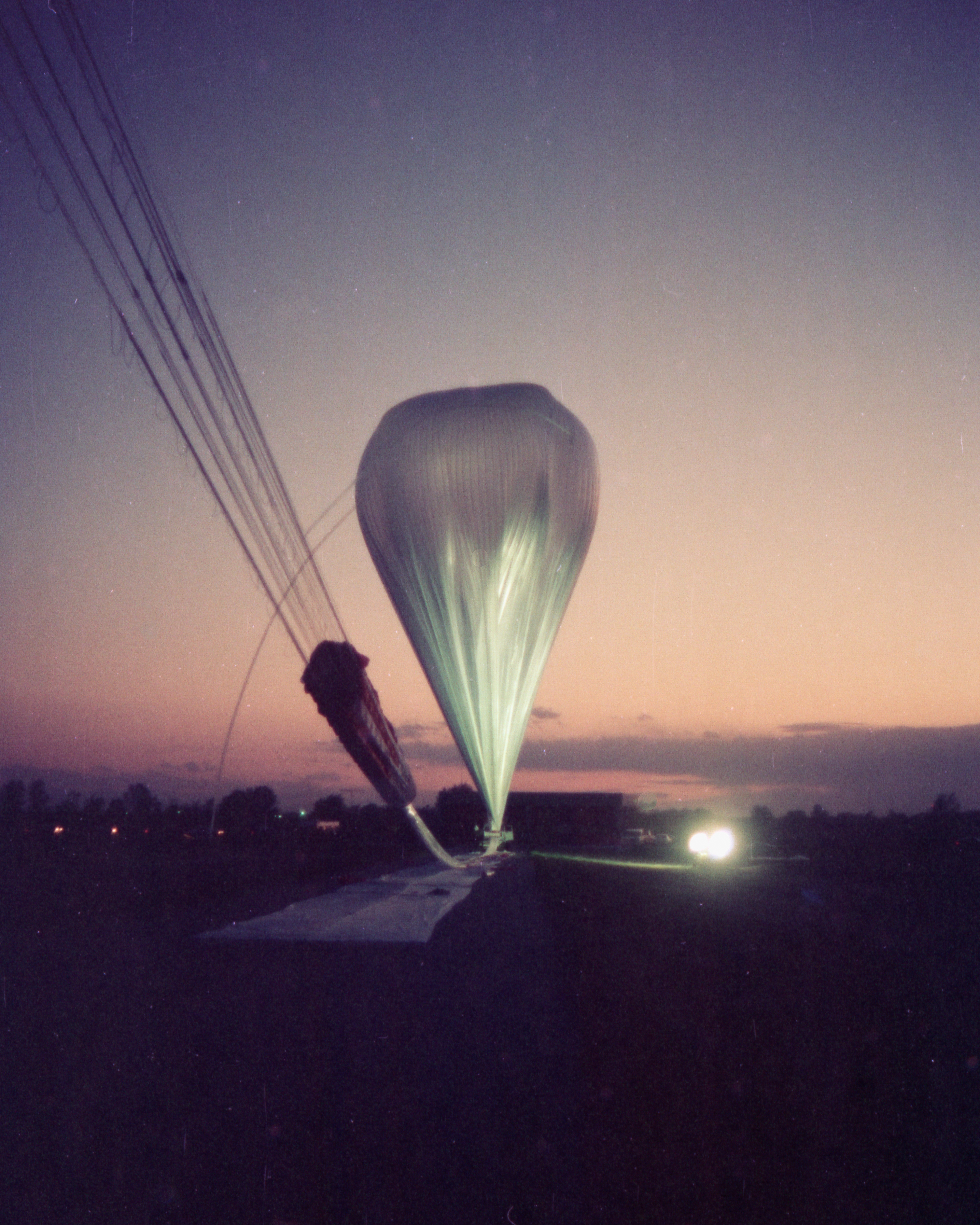
Ready for launch. The helium tank truck is to the left, the long tail of the balloon runs to the right.
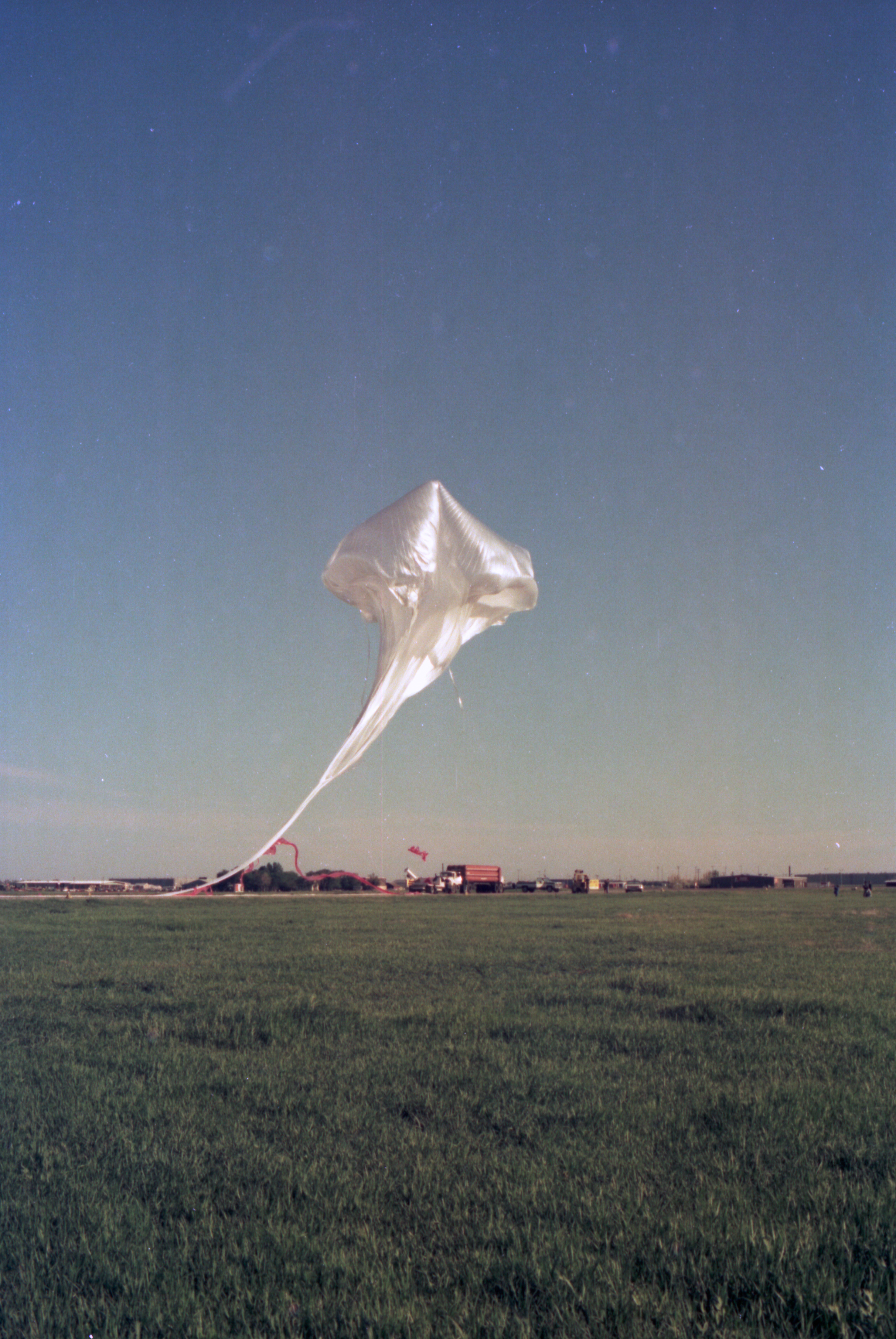
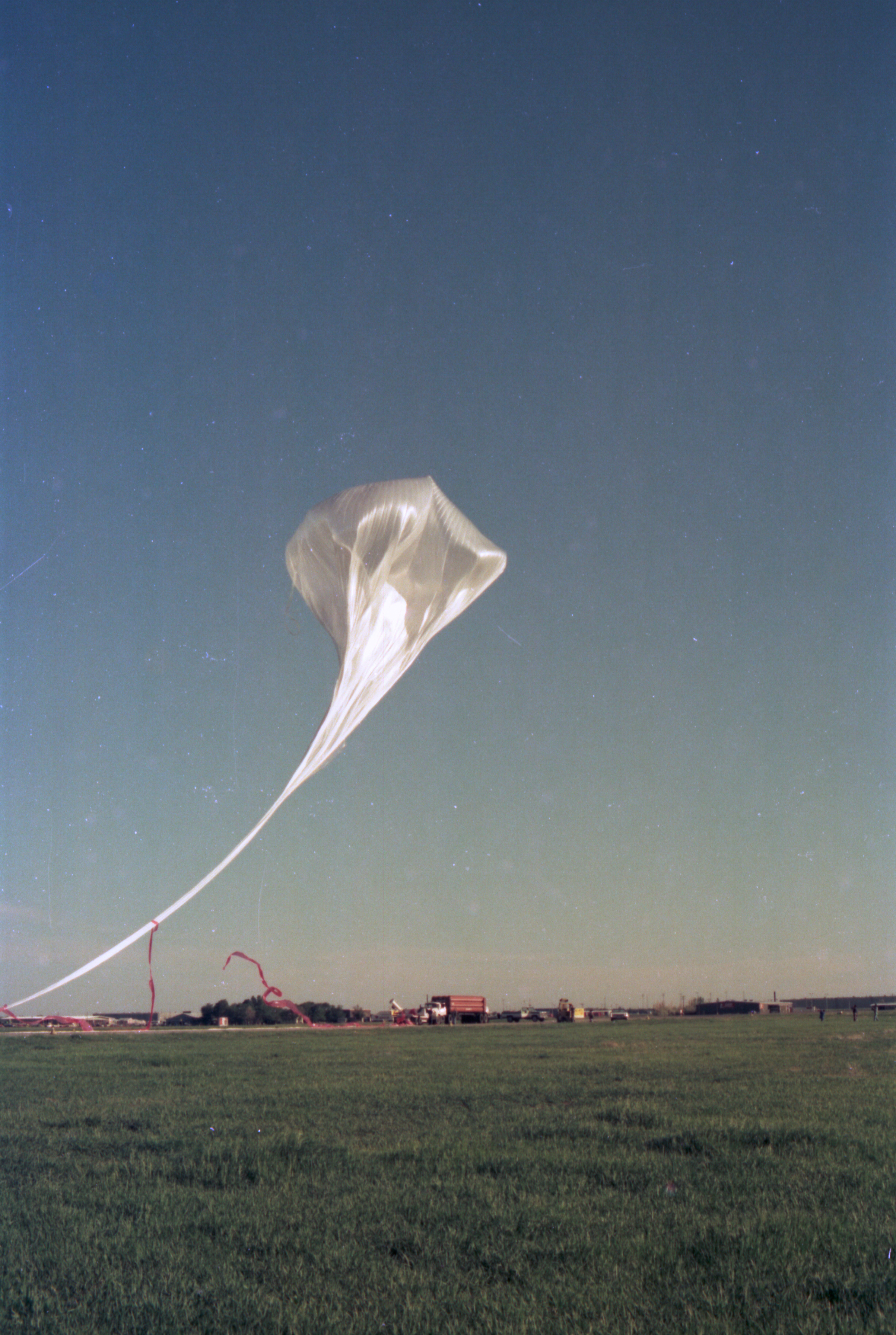
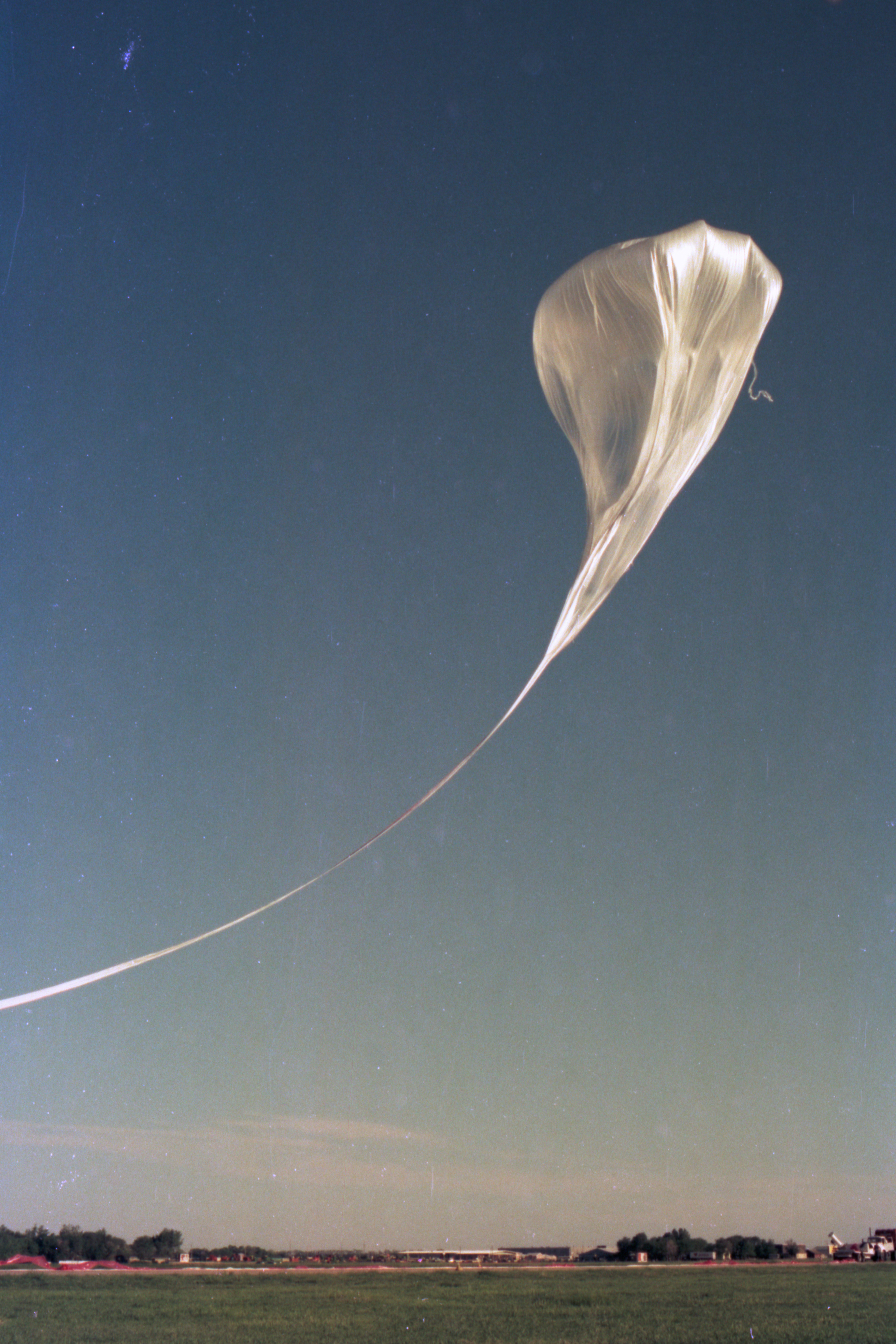
The spool opens (lower right) and the balloon rises, lifting its tail off the runway.