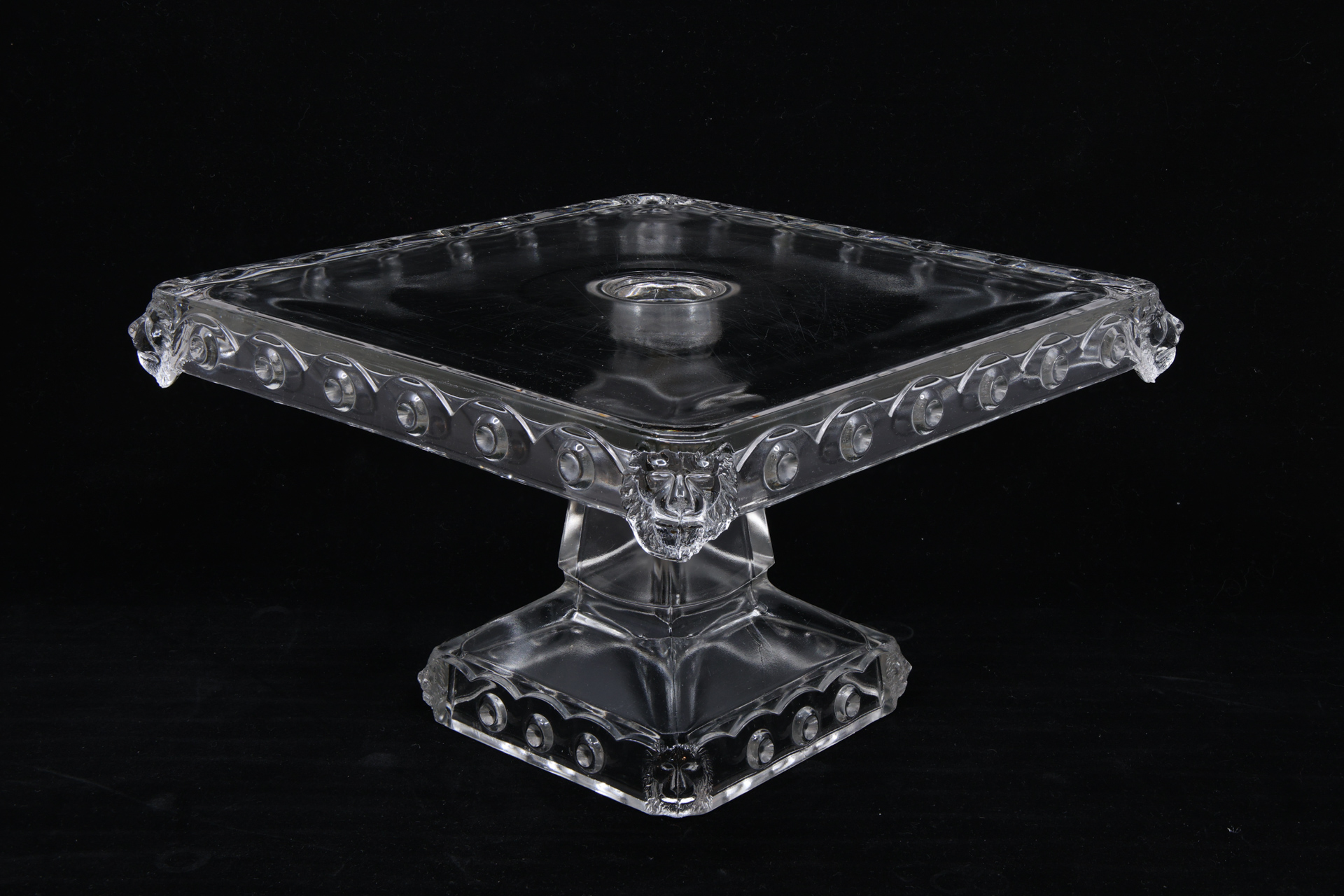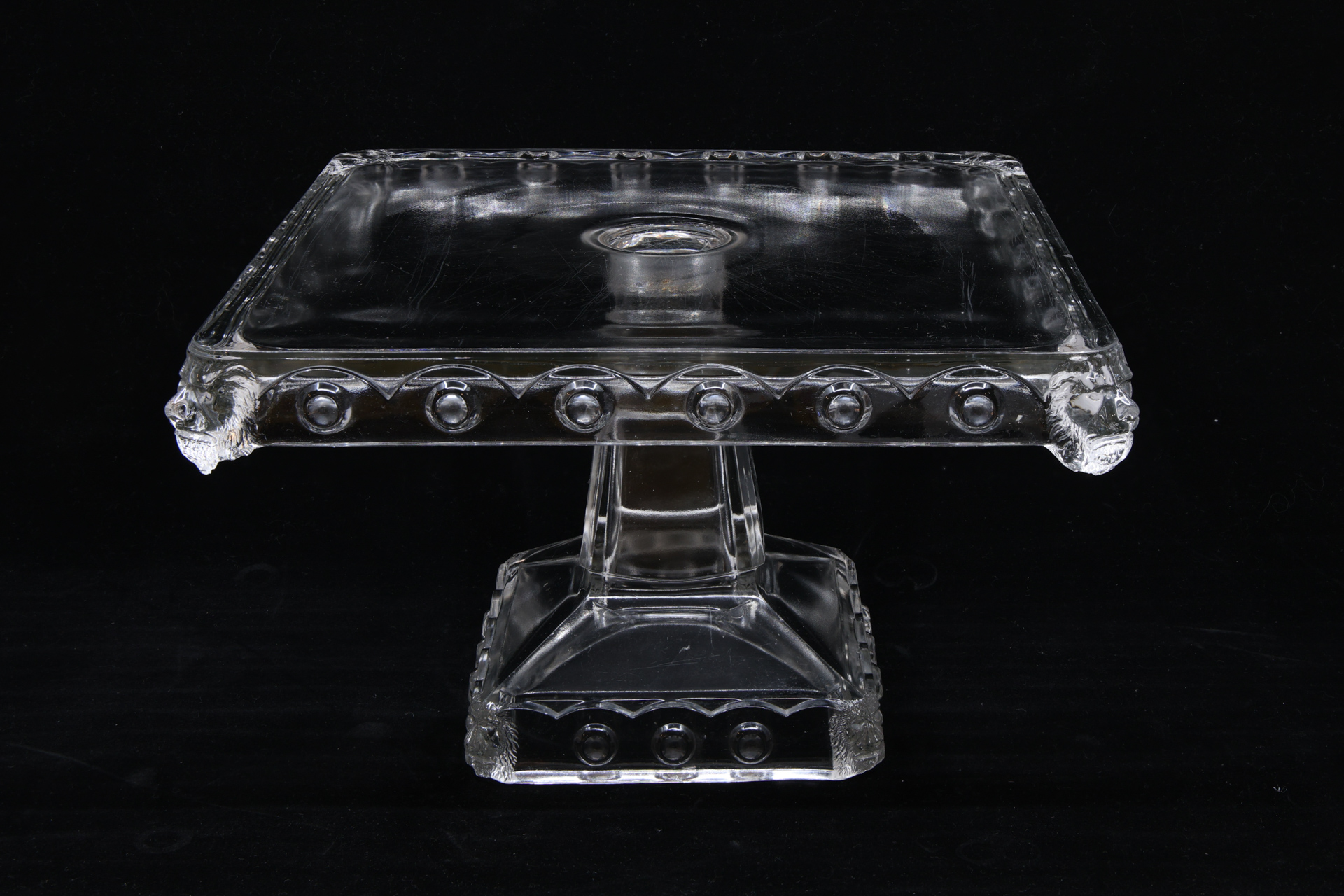

I am preparing this family heirloom for its next caretaker. I am quite familiar with this plate because it was featured at nearly every birthday party my grandmother hosted. And she hosted many! Birthdays were important to her, and every opportunity to celebrate a birthday, especially a grandchild’s birthday, was an excuse to bake a cake and have a party.
Further, it was essential that the birthday was celebrated ON THE DAY. No substitutes or convenient alternatives were allowed. I’m not sure where this requirement came from. Perhaps she did not like that her own birthday, July 2, was overshadowed by the nation’s Independence Day celebrations. Or that her son’s on December 20, was so close to Christmas. Or her sister’s, the next day, even closer. Whatever the cause, she made it clear to everyone that birthdays were special and protected events. It is why I will never forget hers.
[I make this post on July 2, honoring her and everyone else whose birthday is today.]
The cake plate was ever-present in her dining room cabinet where she kept her glassware, but when my grandparents moved out of their South Minneapolis bungalow to a place more accommodating to their aging physical abilities, she found a new home for it—mine! She presented it to me on MY birthday along with a note on its background. Here it is:
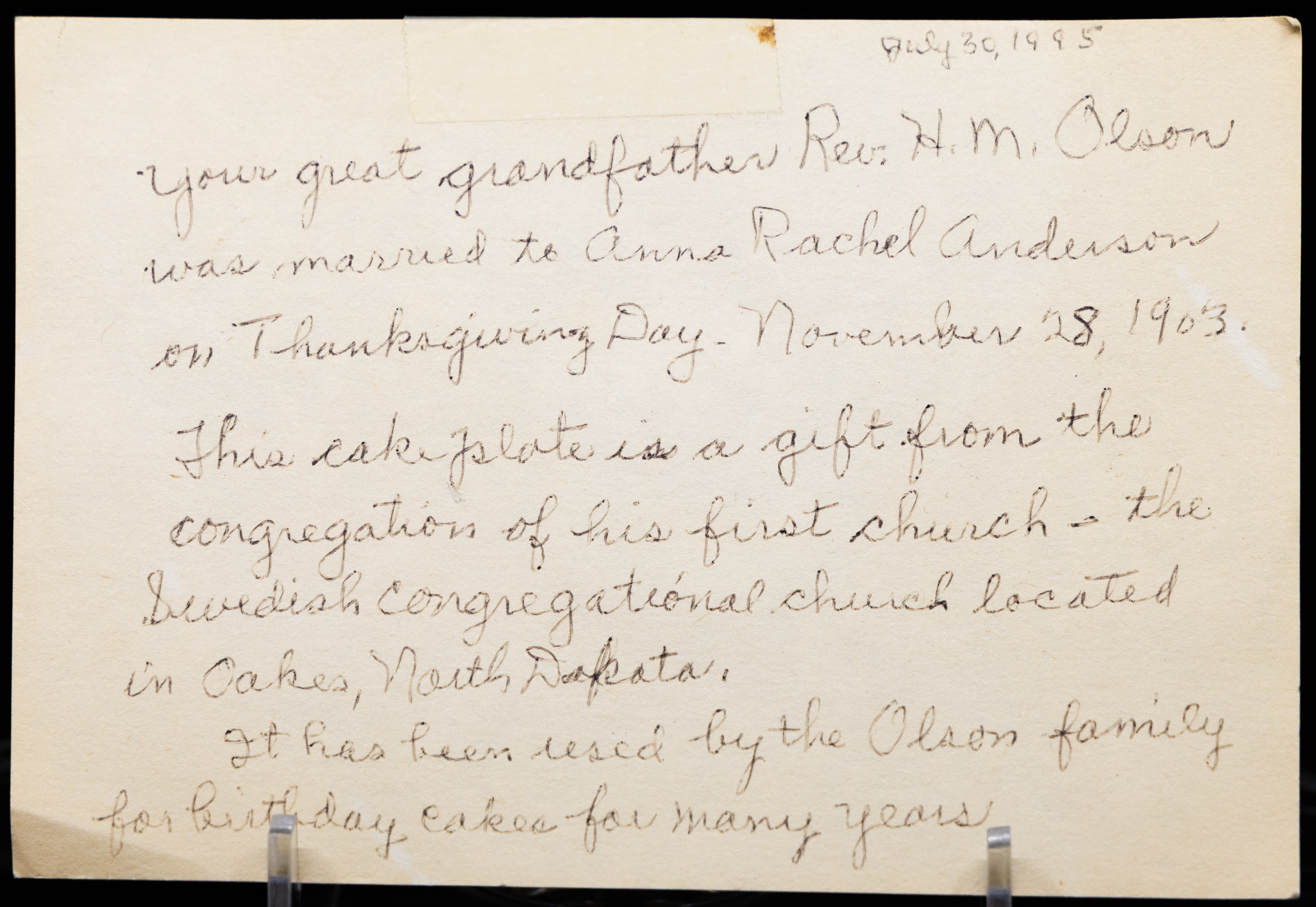
Your great grandfather Rev. H. M. Olson was married to Anna Rachel Anderson on Thanksgiving Day, November 28, 1903. This cake plate is a gift from the congregation of his first church – the Swedish Congregational Church located in Oakes, North Dakota. It has been used by the Olson Family for birthday cakes for many years.”

The cake plate continued its service in our family for many years, but it has not seen much action in the last decade since I moved into and renovated This Odd House. It has been safely stored during this time. There hasn’t been as much of a demand for ON-THE-DAY birthday parties, but there is a growing crop of grandchildren coming into the age range where birthdays suddenly matter a lot.
I encountered the piece again recently, while performing a mild “Swedish Death Cleaning”, an attempt to reduce the load on our children who will one day have to go through our lifetime of saved treasures. This one seemed like it might be worth keeping, and providing some historical context will make it more so.
In 1903, when my great-grandparents married, glass manufacturing methods had advanced to the point where elaborate and ornate serving pieces, previously made only by specialized (and expensive) glass blowing and hand cutting techniques by skilled craftsmen, could now be made using “patterned glass” . This made it affordable for modest-income families, and even for a small congregation on the plains of North Dakota to chip in and acquire such a gift for their minister’s wedding.
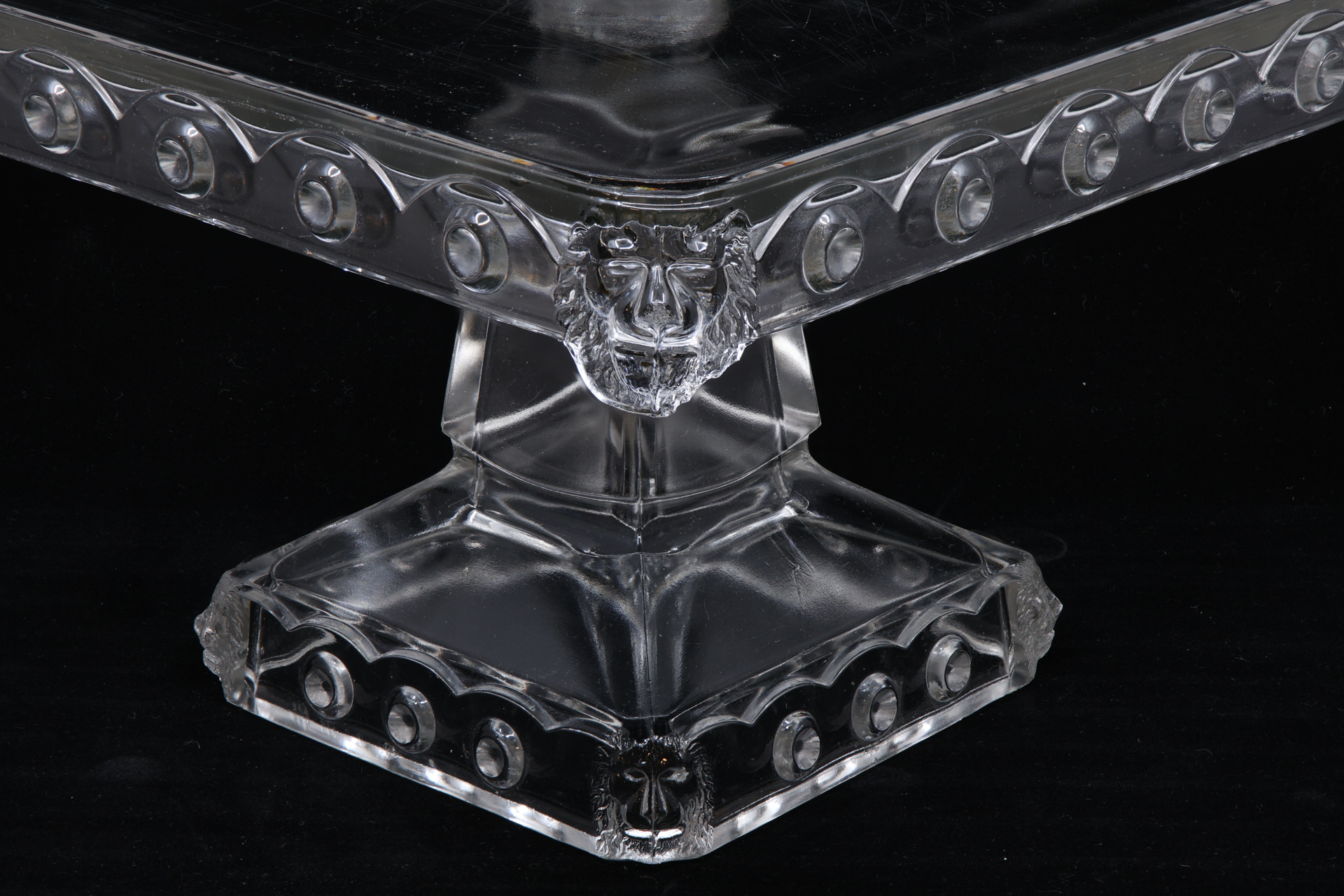
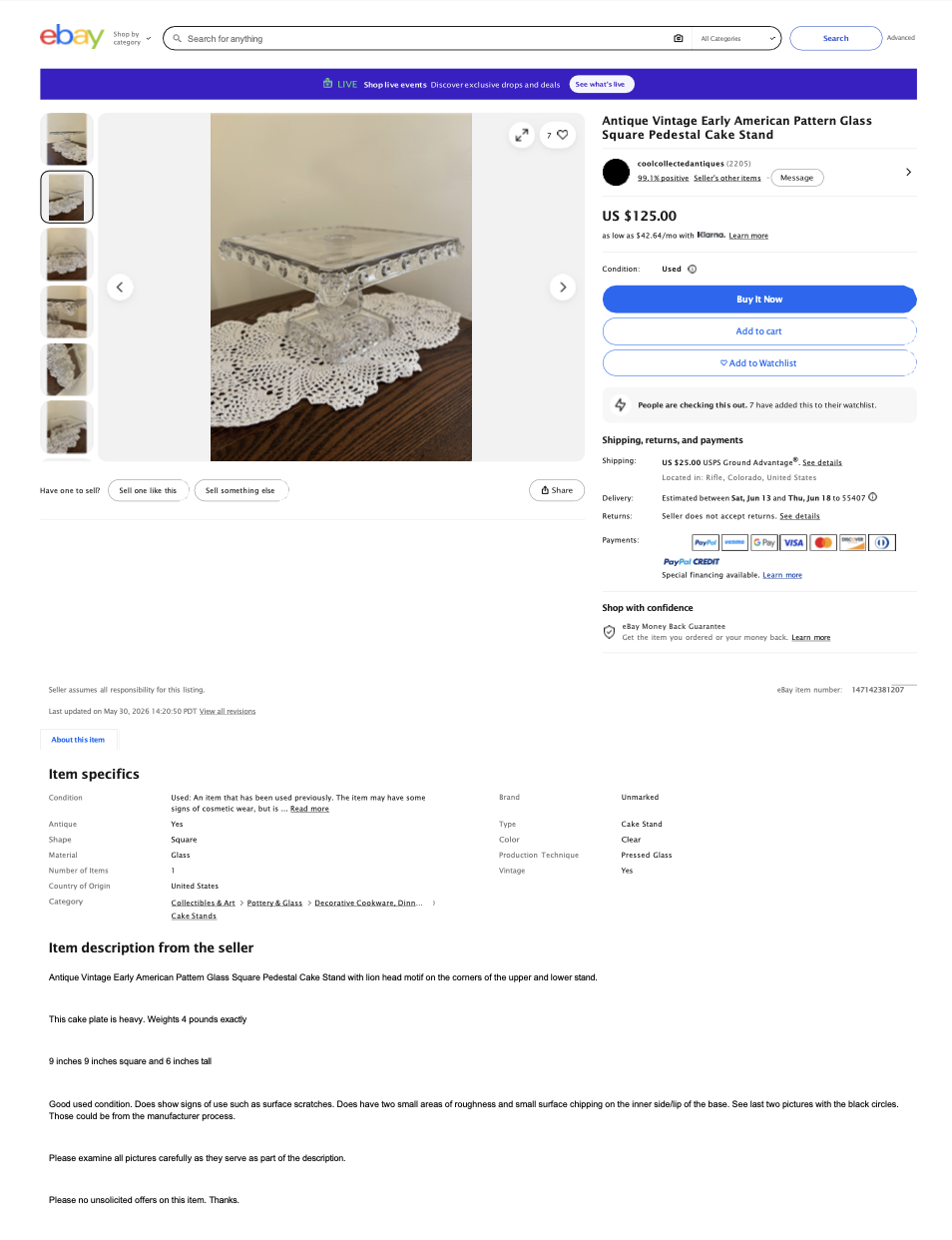
My research revealed that this particular piece is known as the “Atlanta Pattern”, or “Square Lion” because of the lion heads at each corner of the square plate. It was manufactured by the Fostoria Glass Company for a few years after 1895, and is considered scarce to rare. It sold for around $1.00 back then, which today (2026) is roughly equivalent to $40, a considerate wedding gift, and significantly less than similar hand-crafted pieces at twenty times that price. Because of its rarity, it can sometimes be found on eBay for around $125.
This is far less than its value as a family heirloom, especially given its backstory. I would love for it to become a centerpiece for birthday parties in the next generations, so I am documenting it here, to provide one more component of its provenance.
My grandmother is gone, but still lives vividly in my memory. Her passing this item to me was quite deliberate on her part– the note she wrote was dated a few days before my birthday, when she presented it to me. It was her desire that it be carried on in the family. When I think of it, she somehow acquired this from her husband’s parents. When and how did that happen?
So this is a wedding gift passed from the parents to their son and his wife, my grandmother. And then to her eldest grandchild, me. Maybe the next recipient should be MY eldest grandchild. But he is only ten. Should I convey this to his parents in the interim?
Otherwise, the cake plate will remain in my “archives” to be discovered later after I am gone. I don’t control what happens after that. But I offer this little family history to help it on its way.