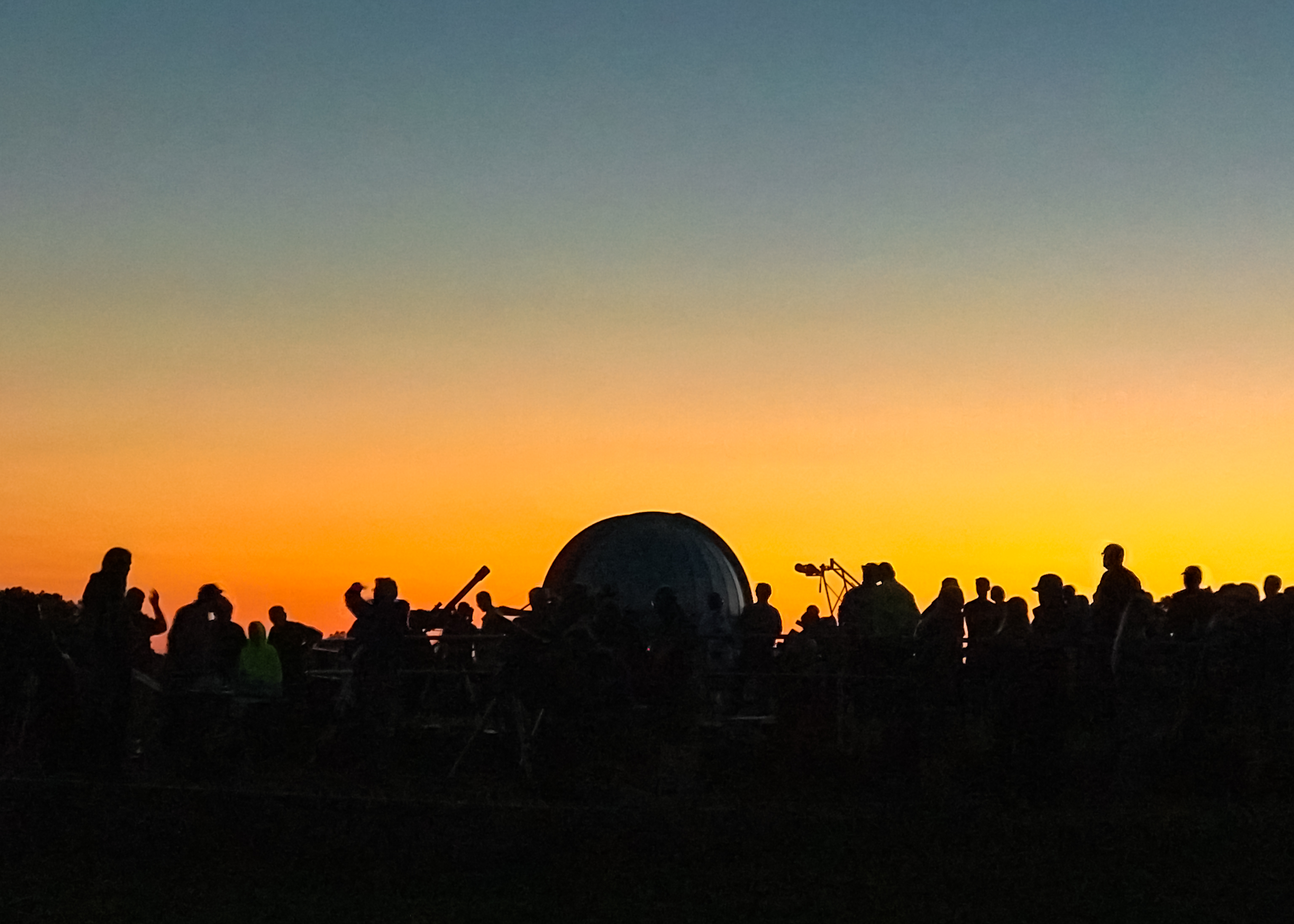
Amateur astronomers from around the country gathered at the observing facilities of the Minnesota Astronomical Society on a warm July evening. They discuss their observing plans for the night and wait in eager anticipation as the brighter planets start to appear in the fading twilight.
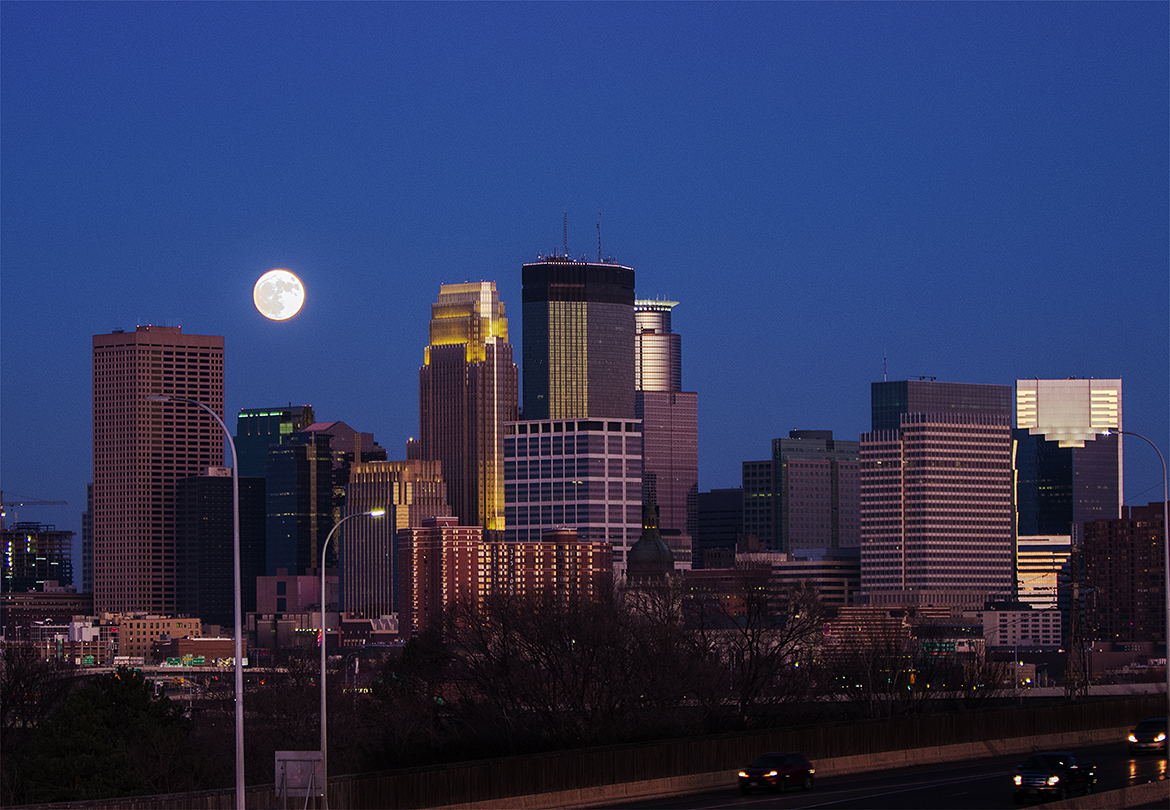
The moon rises over the cityscape of Minneapolis as its buildings start to turn on their own lighting.. This is the “supermoon”, a designation for when the moon is unusually close to Earth and hence, appears even larger than expected.
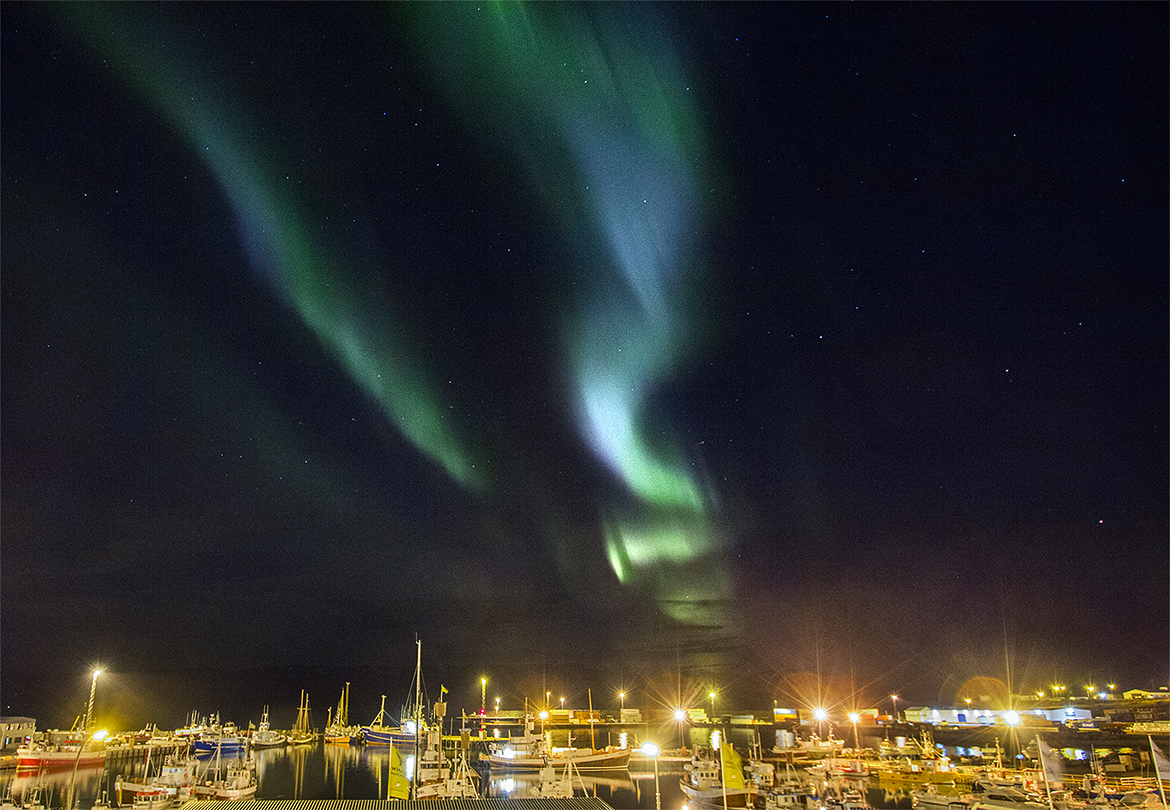
At 66 degrees north, Husavik Iceland is one degree away from the arctic circle. This places it directly beneath the usual position of the auroral oval, that zone of active energized atmosphere that creates the northern lights. The weather in Iceland is often overcast, but on this day the clouds cleared and the aurora were so brilliant they could be seen even over the lights of the city center and its active harbor.
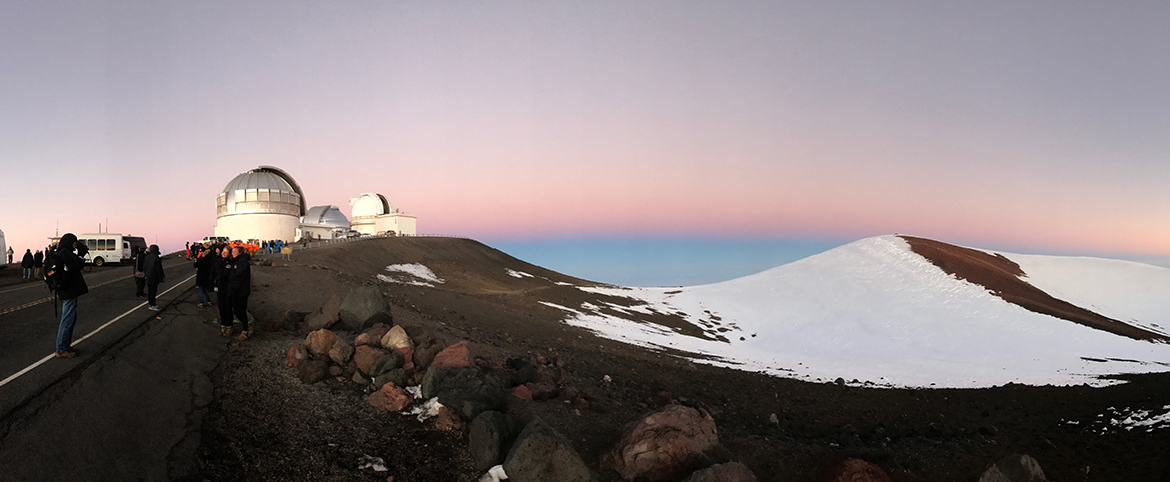
The rosy glow of scattered twilight in the East is known as the “Belt of Venus”, which rides above the deep blue of Earth’s shadow on the sky. Here it is witnessed from the vantage of Hawaii’s tallest peak, Mauna Kea, as the world’s premier telescopes prepare for another evening of peering into the universe.
We are guests on the river boat Omar El Kayan, named after an Arab poet, visiting the areas of Egypt where Lake Nasser, created by the Aswan dam has submerged the ancient temples along the former banks of the Nile river. Abu Simbel was the most famous, but there were others, and we visited the sites where they had been carefully relocated.
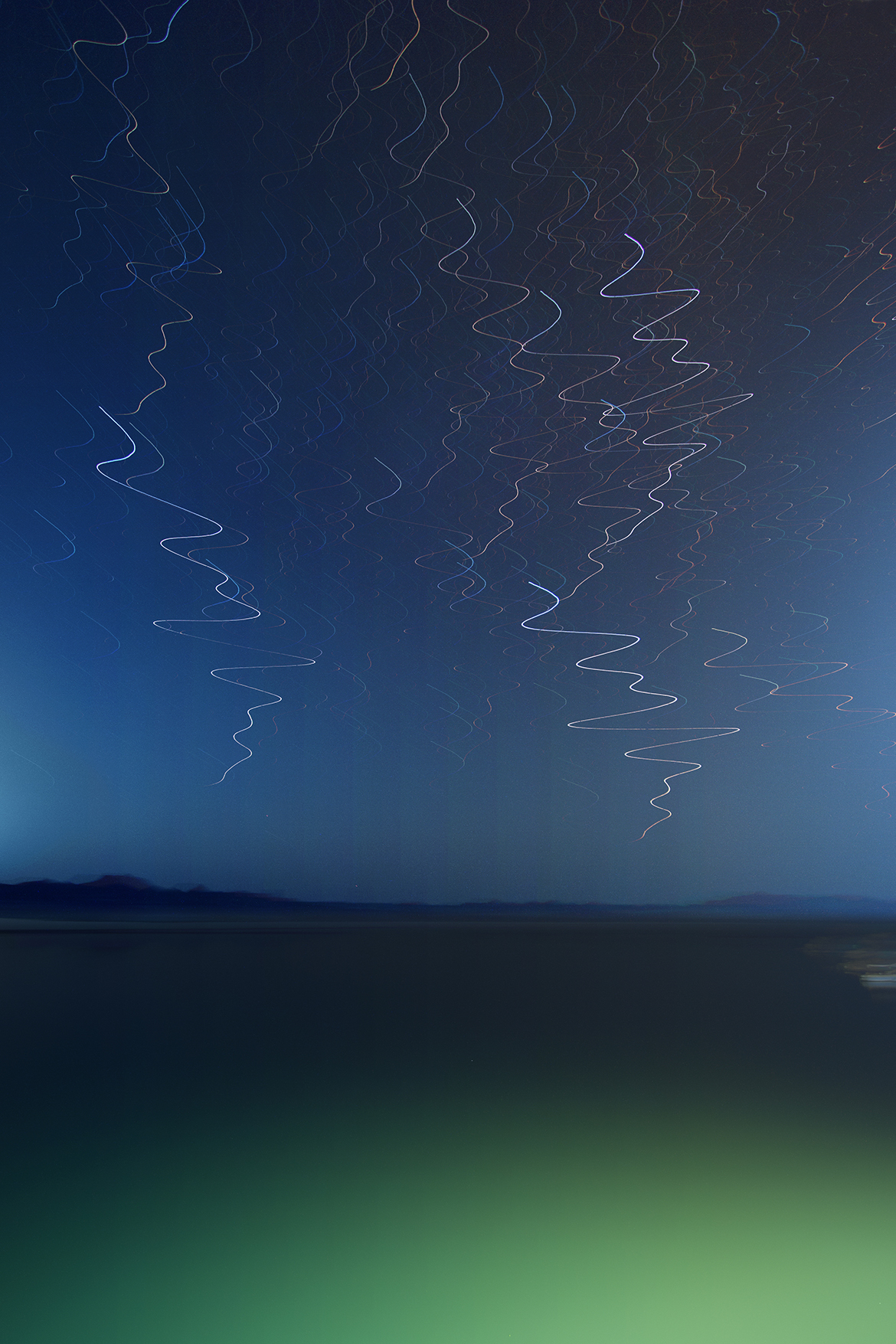
At the end of a hot day navigating the lake, the boat moored. The wind and water were calm and the sky was dark on this section of the Nile. Out of curiosity I made a series of exposures hoping to capture the feeling of stars above the famous river and the desert around me. But calm water does not mean motionless water, and the camera recorded the small wave motions rocking the boat on which I was a passenger for the night.
Nile River near Kasr Ibrim, Egypt 8 October 2016 EOS 60Da with EFS 10-22mm(10mm) 5 minutes, f/4, ISO 1600 Composite of 23 5-minute exposures (~2 hours)
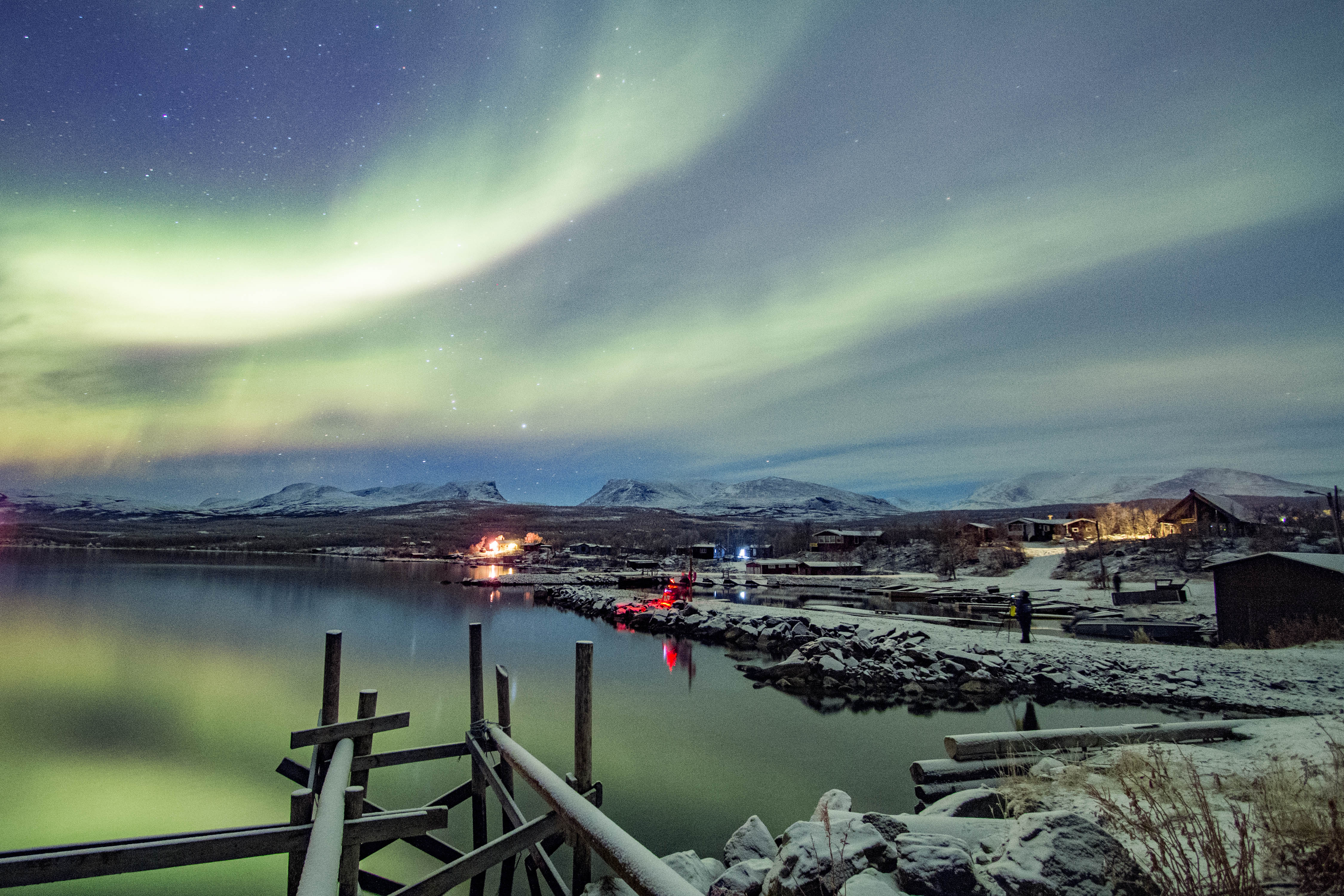
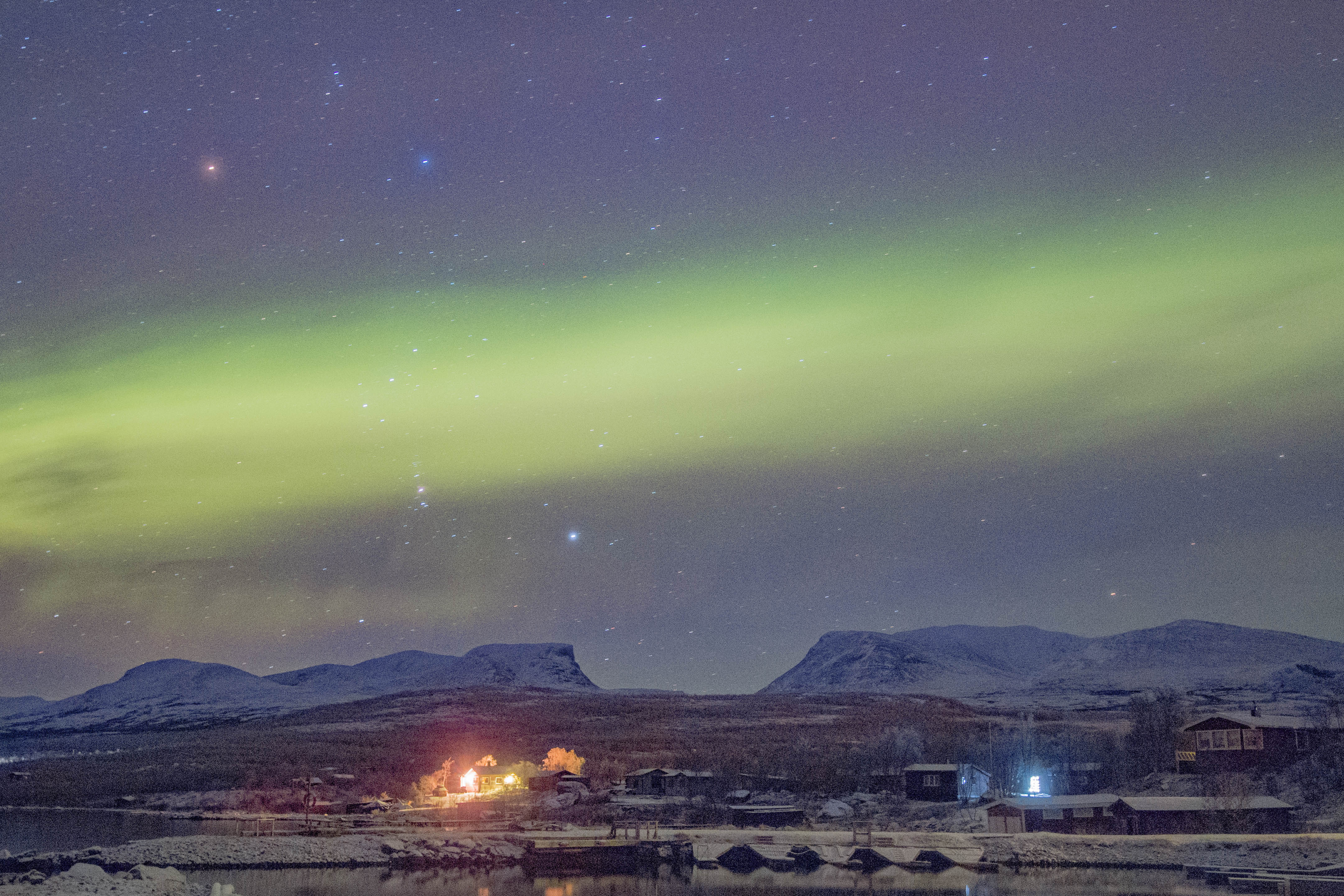
The view from the docks at the town of Abisko on Lake Trondetraske. The “Gates of Lapland” is seen in the distance as a notch in the wall of mountains.
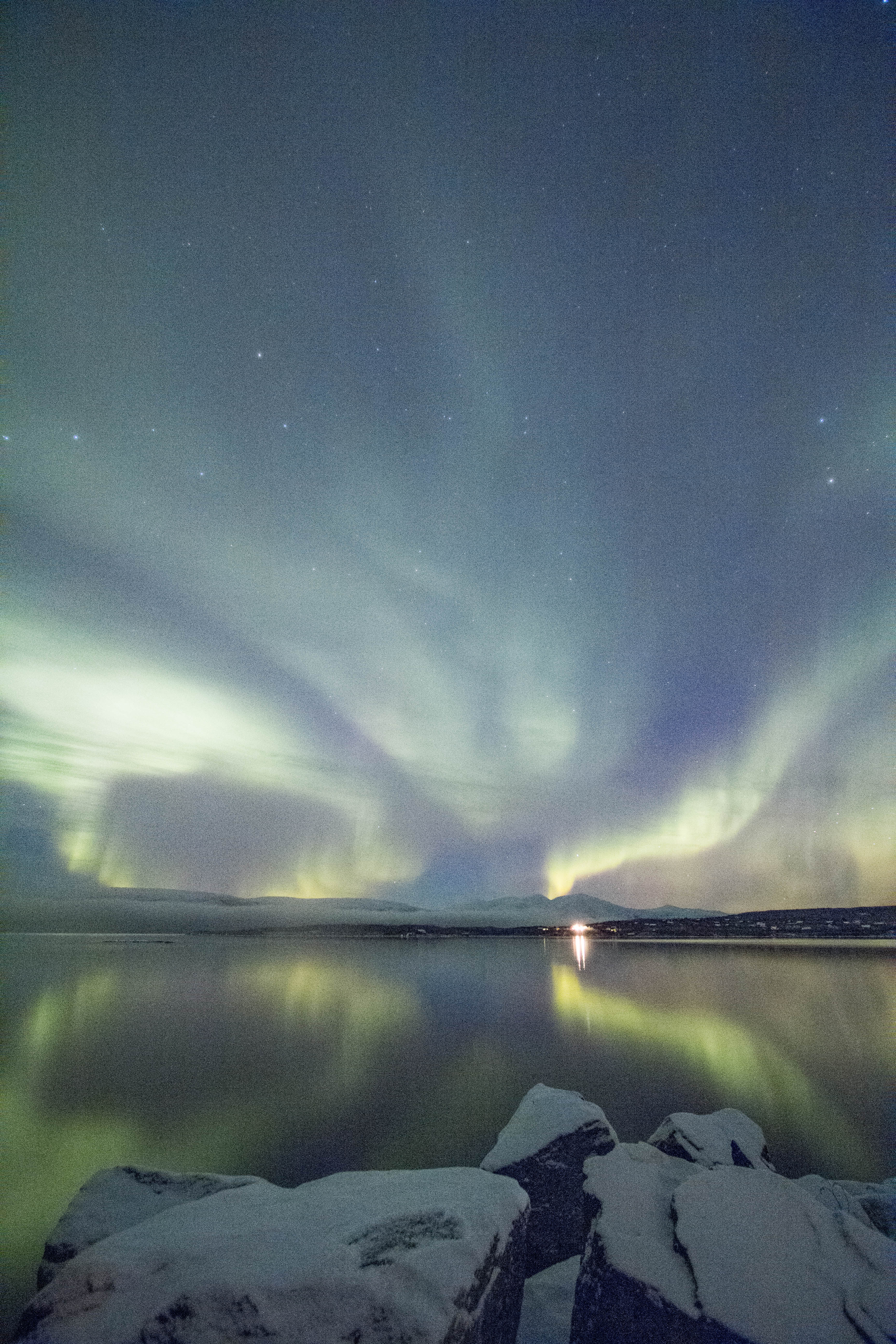
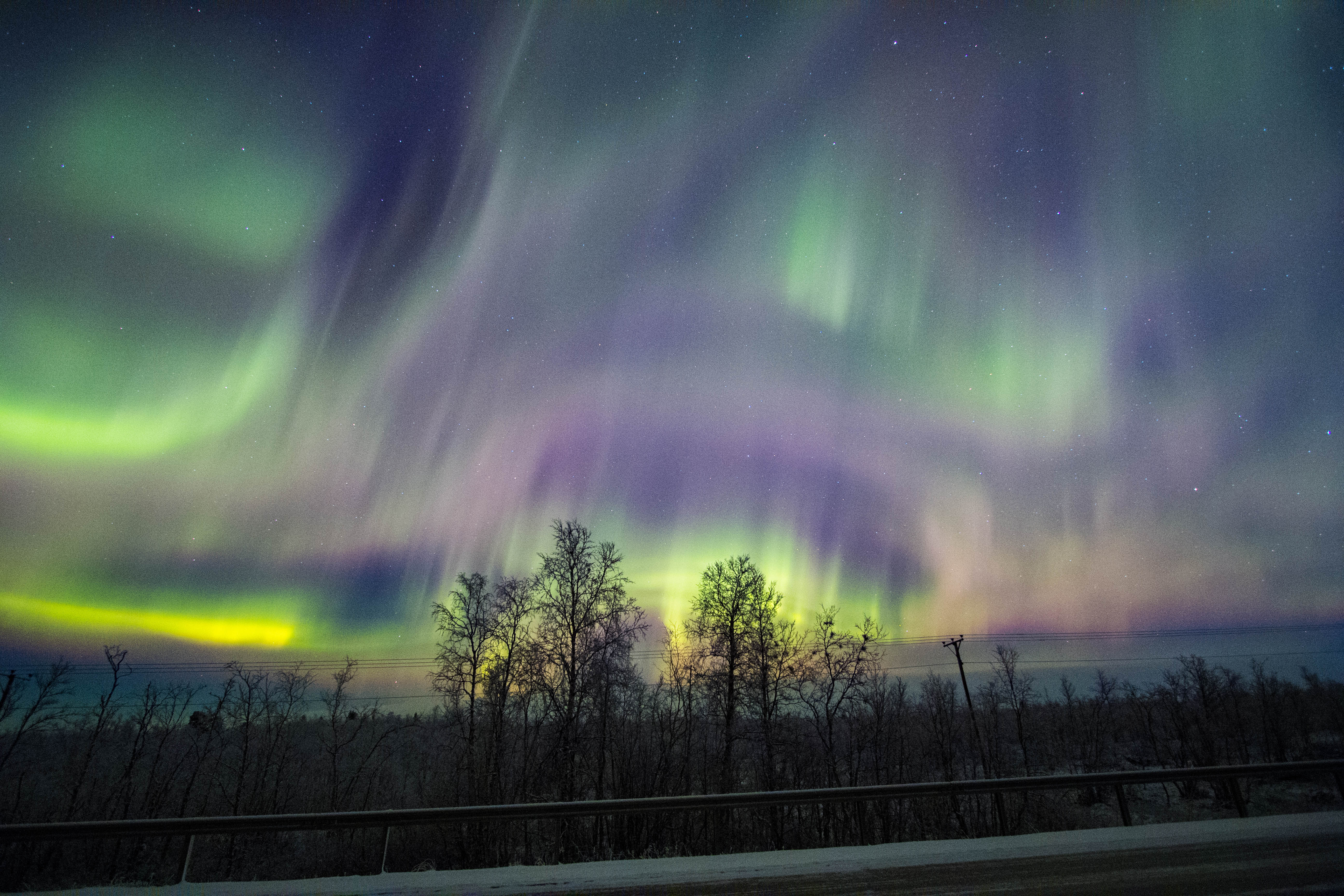
Green light from ionized oxygen dominates, but is accompanied by reds from ionized nitrogen. They follow complex fields that creates sheets and apparent loops of light.
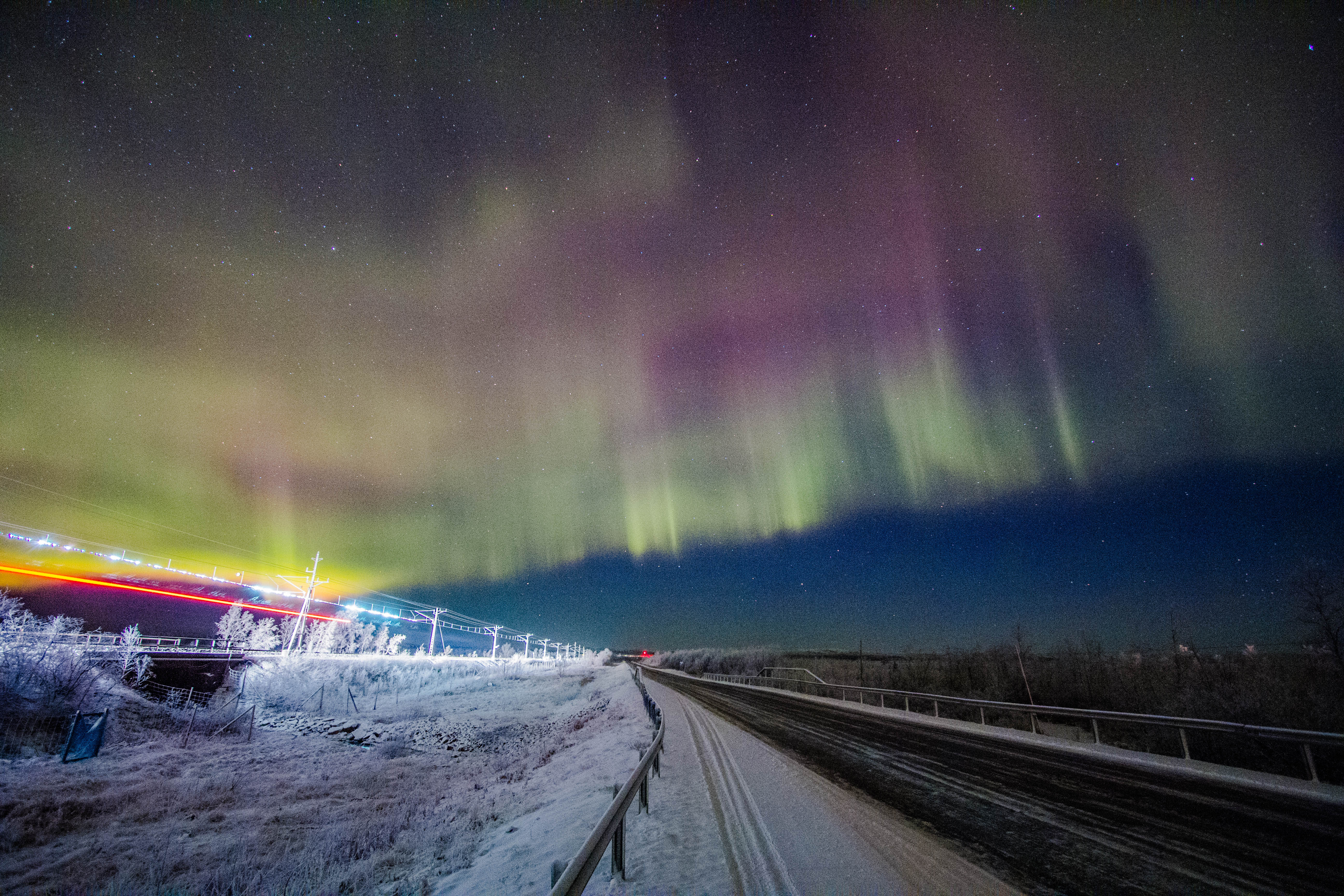
During this 8-second exposure, a train enters the view, its headlight illuminating the landscape. The train adds its own trails of light, including the arcs of its electrical contact with the overhead wire.